Performance management your managers will actually use

Goals that update themselves from the systems you already run, 1:1s that happen monthly instead of never, and review cycles that finish on time. Works with the HR system you already have.

Works with what you have

Keep the HR system you have, or take ours

Most companies looking at performance software already have somewhere their people live. Perform reads from it. People, teams, reporting lines and start dates sync across, so nobody builds a second org chart and nobody maintains two lists of leavers. Fixing performance is not a reason to replace your HR system, and this page is not going to pretend otherwise.

Your HR system

People, roles, managers and start dates sync in, hourly or daily depending on your provider. While the sync is on, those users cannot be edited in Perform at all, so your HR system stays the one version of the truth. Perform does not pull time off or bank details, even where they are available.

Your CRM

Salesforce, HubSpot, Zoho and Dynamics 365. A manager opening a 1:1 sees that person's numbers in the sidebar instead of pulling a report first.

Your service desk

Zendesk, Freshdesk, Jira Service Management, ServiceNow and HubSpot Service Hub. Ticket status, priority and assignment appear beside the 1:1 and inside the review cycle, so support conversations start from what actually happened.

Read only in every case. Perform never writes back to your HR system, your CRM or your service desk.

What you get

Four things, each one finished

Goals that update themselves

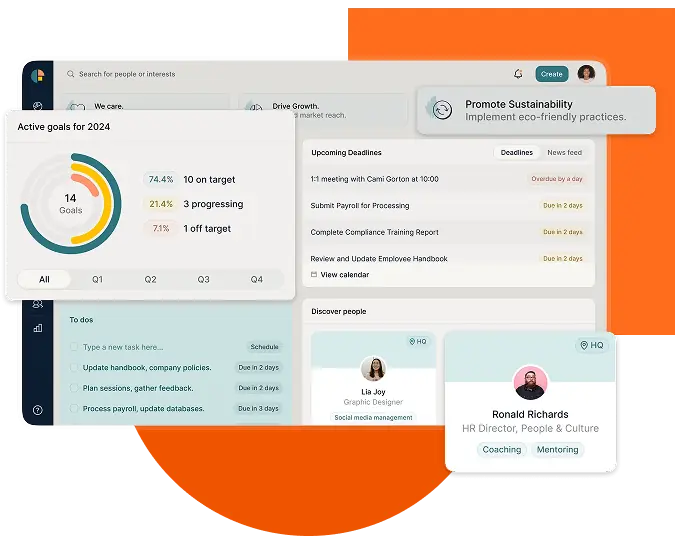
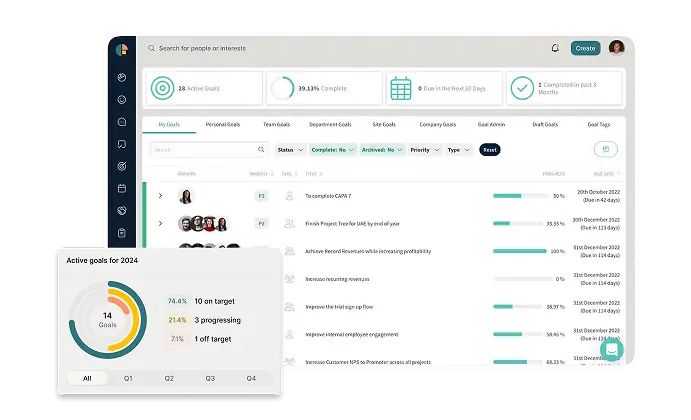
Link a goal to the number that measures it and progress moves on its own. Recurring revenue tracks closed-won. Customer NPS tracks the survey. Nobody invents a percentage on the way into the review.

  • Company, department, team and individual goals
  • Progress pulled from your CRM or issue tracker
  • Multiple owners on a shared goal
  • Live completion rate across the whole set

1:1s that managers can actually run

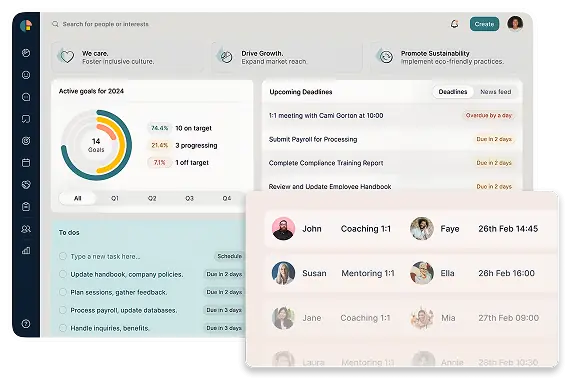
Coaching and mentoring sessions scheduled ahead, agendas that carry forward, and overdue meetings surfaced rather than quietly missed. Gartner puts the performance lift from good coaching at up to 26%.

  • Templates and agendas that carry forward
  • Overdue meetings flagged on the dashboard
  • Private manager notes
  • Prompts for the harder conversations

Reviews that finish on time, and stand up afterwards

Build a cycle once, launch it to any group, watch completion in real time, and keep ratings consistent so a 3 means the same thing in every department. Dated, documented and defensible if a decision is ever challenged.

  • Annual, quarterly or mid-year cycles
  • Consistent ratings across managers
  • Completion by manager and department
  • An evidence trail for probation and dismissal decisions

Spot small issues before they become big problems

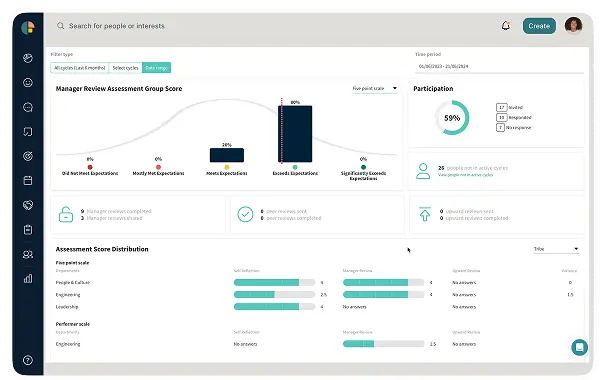
Award-winning visual analytics let you track performance trends across divisions, departments and individuals in real time. Calibrate manager ratings for fairness and use a traffic-light view to see exactly where company strategy is slipping.
Ask the right questions, get answers you can act on

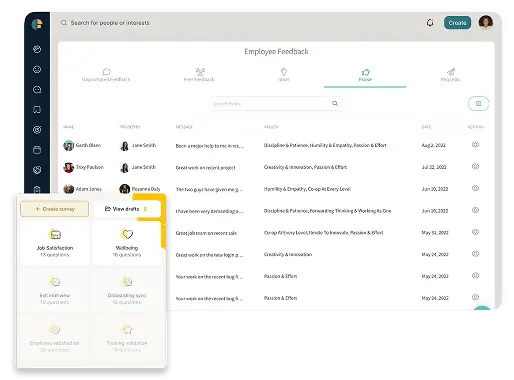
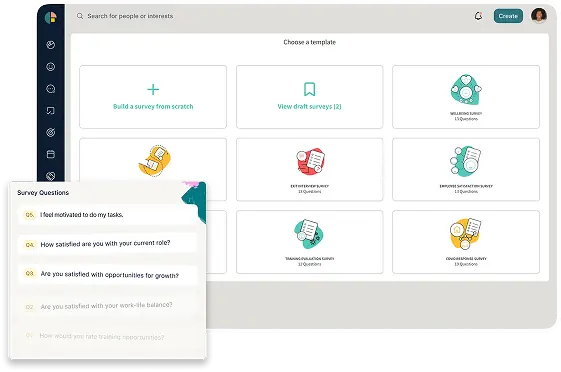
Run engagement surveys to find out how people really feel, or 360 feedback surveys to hear from those who know your staff best. Use the stock question library or build your own, schedule them over time, and watch the trends move.
Know who your high performers and high potentials are.

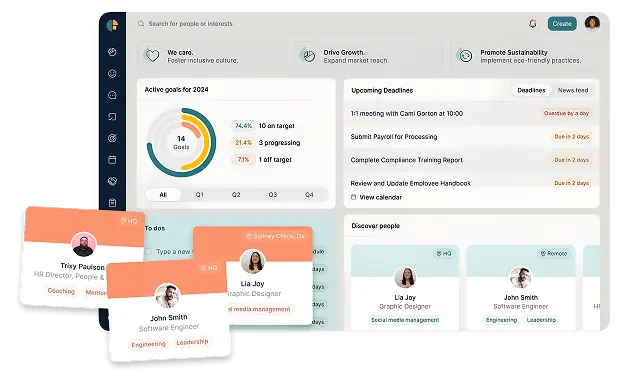
Map performance against potential to understand your bench strength, identify at-risk people in critical roles, and surface development needs early. Make confident, data-driven talent decisions instead of going on gut feel.
If you already use HRLocker

Reviews in Core HR, or Perform?

Core HR runs the review. Set the cycle, send the form, keep the record. If a documented annual review is what you need, you already have it and there is nothing here to buy.

Core HR

The review itself

A cycle, a form, a rating and a record filed against the person. One conversation, documented.

Perform

The eleven months in between

Goals people can see, 1:1s that leave a trace, feedback captured when it happens rather than remembered in December.

Together

A review with something in it

The form stops being a memory test, because the evidence gathered itself over the year.

Worth saying out loud on the call rather than leaving a customer to work it out. Nobody should buy Perform believing they had no review process before.

Proof

Three companies who stopped running reviews on a spreadsheet

Performance software lives or dies on whether managers use it, and no feature list answers that. These are the three questions buyers ask on every call, each answered by a customer who had the same problem.

"Did managers actually use it?"

A company where manager completion went from a chased minority to a full cycle finishing on time. Name the completion rate and the month it changed.

Adoption

Read the sory
"We already have an HRIS."

A company running Perform on top of the HR system they kept. What synced, what they were afraid of, and what it took to set up.

Alongside an HR system

Read the story
"Would it stand up if challenged?"

A company who had to evidence a performance decision and could. Careful, factual, no detail that identifies the individual.

The record

Read the story

See it on your own review cycle

Compare

What most companies are actually choosing between

Not other platforms. The spreadsheet, or the reviews tab that came free with the HR system they already bought.

Spreadsheets and calendar reminders The reviews tab in your HR system Perform
A review cycle that runs without someone chasing it No Partly
Goals anyone can see between reviews No No
1:1s with an agenda and a record that survives the meeting No No
Feedback captured when it happens, not in December No Partly
A written record of performance you could stand over later No Partly
A manager can see their own team without asking HR No Partly
Works alongside the HR system you already have

What performance is costing you already

Two costs sit outside most budgets because nobody bills for them: the people who leave, and the far larger group who stay, do the minimum, and cost you a fifth of their salary in output nobody ever sees. Put your own numbers in.

Role level

€20,000 €200,000
1 40
10 1,000

Replacement cost at 50% of salary for entry level and 250% for leadership, per SHRM, covering recruitment, lost output and time to full productivity.

Cost of last year's leavers

Perform for your whole company, for a year

Figures are indicative and use published averages, not your own data. Sources are listed under each tab.

The same product, going further

Add Engage when you want the development side too

Perform runs the performance cycle. Engage is the second layer of the same product, adding surveys, coaching and career development.

Surveys

Research-backed surveys that are quick to deploy, with results captured in real time.

Coaching and mentoring

People find a coach or a mentor, with structured agendas and automated reminders.

Careers

Career paths with clear steps, and pathway applications people can put themselves forward for

Competencies and skills

Strengths, skills and progress visible against the role, rather than kept in a spreadsheet

Pricing

Per person, per month afforability

The same price whether Perform sits on its own or alongside the rest of the platform. Published, so there is nothing to find out on a call.

From €4 per user / per month
Perform €4
Engage, added to Perform +€2
Both together €6

Deployment is a one-off, quoted on headcount, rather than spread across the monthly price.

Room to add

Add the rest when you need it

Perform needs to know who reports to whom. If that comes from the same place as everything else, the org chart stops being something you maintain twice.

Add Core HR

One org structure, not two

Managers, departments and sites come from the employee record, so a promotion updates the review hierarchy without anyone remembering to.

Add Onboard

Objectives before day thirty

A new starter arrives with their record complete, so goals and check-ins can begin immediately rather than after the paperwork settles.

Add Recruit

From applicant to appraisal

One record from the day they apply to the day they are promoted, which is also the evidence trail if a decision is ever questioned.

Start with one review cycle