Author: Dee

3 min read

In this new era of artificial intelligence (AI), digital transformation, and rising business costs, SMEs in professional services, technology, non-profits, and construction companies are facing a constant uphill battle.

In the SME market in Ireland and the UK, approximately 70% of digital transformation projects fail to achieve their objectives. This high failure rate is consistent with global trends and is often attributed to several key factors.

One major issue is the lack of a comprehensive change management strategy. Projects that do not implement structured processes to help stakeholders understand and embrace changes are much more likely to fail. Additionally, treating digital transformation as solely an IT task, rather than a company-wide initiative, can lead to fragmented and ineffective implementations. Lastly, trying to do too much too quickly without adequate planning and resource management can also derail projects.

While every company should have digital transformation as a strategic pillar, it is possible to mitigate the risk of failure. Most digital transformation projects get derailed due to people. People do not derail these projects on purpose, but do so because of a lack of understanding and a reluctance to change their daily routines, as they fail to see how these changes can improve things.

After implementing thousands of Human Resources Information Systems (HRIS) for SMEs in the UK and Ireland, HRLocker knows that these projects can be implemented successfully and are more likely to succeed if you get your people on board. HRIS software impacts everyone in the organisation, and when implemented effectively, it lays the groundwork for further digital transformation success, as employees experience the benefits firsthand.

Implementing an HRIS System: Key Considerations

Cost: Ensure that the cost is within your budget and offers a clear return on investment.

Integration: The ability to work with other systems to generate reports that help with overall company metrics.

Ease of use: Select a system that is user-friendly and can be easily implemented.

Compatibility: Ensure new systems are compatible with your existing tech stack.

Implementation time: Aim for a short turnaround time from start to implementation.

Sector suitability: The system should be fit-for-purpose based on its cost and use relative to your organisation's sector and size.

Ownership: Management of the system outputs should be assigned to a specific department or individual within the company.

Too often, HRIS and people systems get left to the last phase of a digital transformation project. Frequently, the project runs over budget or time. In many situations, the HRIS gets dropped altogether. We advocate starting your digital transformation journey with people systems. They can be implemented quickly and effectively, and help get employees accustomed to the inevitable changes that will happen as your company evolves.

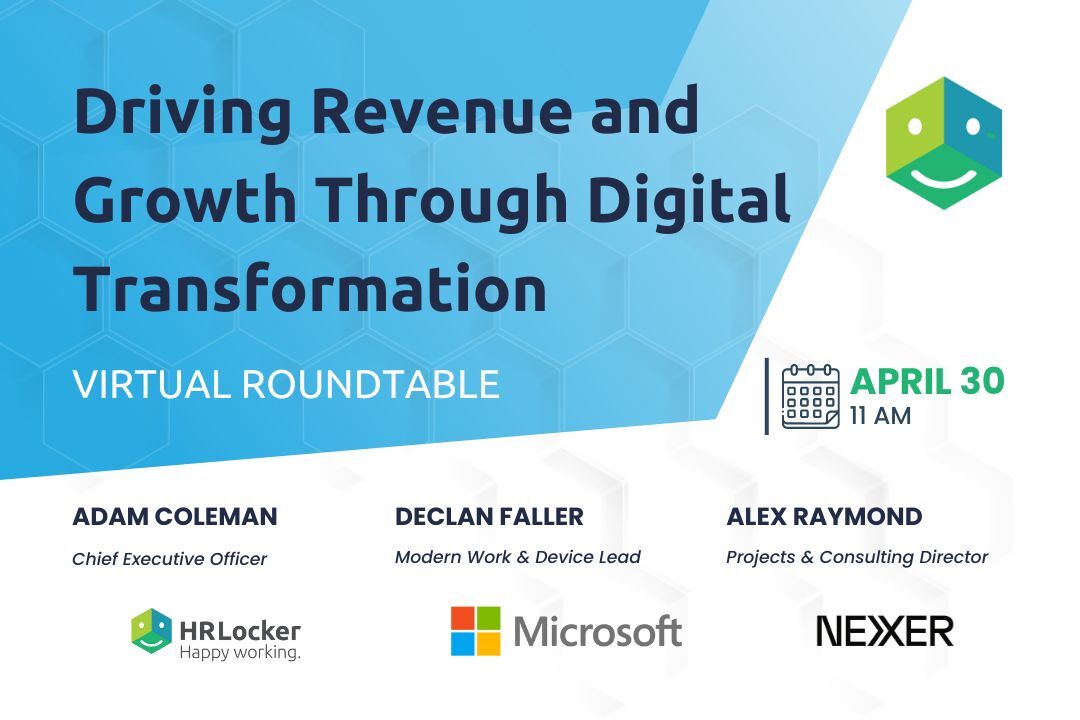
HRLocker hosted a virtual roundtable with valued guest speakers from Microsoft and Nexer on digital transformation, the benefits and growth opportunities for organisations and how it has enabled companies to scale. Find out more here:

Driving Revenue and Growth Through Digital Transformation Watch Now

Actionable ending

To ensure your digital transformation projects succeed, start with a robust change management strategy. Focus on people systems first, such as HRIS, to build a solid foundation for future digital initiatives. Remember, the success of digital transformation lies in getting everyone on board, understanding the benefits, and managing change effectively.

For more insights and tailored solutions, schedule a call to see how we can help in your digital transformation journey.

Achieving Digital Transformation Success for SMEs through Effective HRIS and Change Management was last modified: July 28th, 2025 by Agile Communications

(more…)

2 min read

One of the most time-consuming jobs for companies can often be managing leave requests from employees. Trying to sort through all of the different types of leave can easily become a very complicated task!

There are a few key areas that, once addressed, can really help you with managing employee leave requests. Here's an overview:

Clear Communication and Policies

Having a clearly defined leave policy will ensure that your employees understand how the company manages leave requests. Specify a minimum time for leave requests to be submitted. Remember, having the policy is only the first step; the policy needs to be clearly communicated to all employees.

Communicate Mandatory Company Days

If there are certain times that the office will be closed, put these dates in as soon as you have them. If your company closes for Christmas, put the mandatory company leave into the calendar the instant the dates are confirmed. Using the HR system's shared calendar will allow employees to know how many days they will need to use for these closures.

Populate Recurring Leave

Parental leave, study leave, rostering off, there are lots of times an employee might want to book recurring leave. If employees know these dates in advance, put them into the calendar. Even if these dates are well into the future, populate the calendar now to allow for clear planning.

Set Limits

For most departments, there will be a minimum number of employees that are needed for things to run smoothly. To ensure that leave does not disrupt company operations, be sure to communicate these limits to employees.

Be Proactive

Review your leave calendar on a regular basis to avoid unnecessary disruptions. Monitor how many annual leave days employees have and be sure to encourage them to take leave evenly throughout the year.  Try to avoid a large number of employees leaving all their annual leave at the end of the year.

New Recurring Leave Feature in HRLocker!

Is someone going to be taking the next 10 Fridays off to do a course?

Is an employee taking every Wednesday and Friday afternoon off work as parental leave?

Do you want to roster your staff to work every 3rd Saturday for the rest of the year?

HRLocker now allows you and your employees to request recurring leave as a single request, making all these requests much easier.

Watch the video below to learn how.


Recurring Leave – Managing Employee Leave Requests was last modified: August 7th, 2025 by Agile Communications
(more…)

3 min read

The Great Resignation and the Power of Learning & Development

You’ve seen the news and heard the warnings: employees are dissatisfied with their jobs and are increasingly leaving their employers in search of better development opportunities. The Great Resignation is in full swing. But what if you could retain your talent by offering them the learning and development opportunities they crave? Research suggests that enhancing career development within your company can help retain staff and fill skills gaps with existing talent.


Why Learning & Development Matters

The Importance of Career Development

According to Work Institute’s 2020 Retention Report, the primary reason employees leave their companies is a lack of career development. By providing opportunities for skill expansion, employers can not only retain top talent but also address skills gaps internally.

Attracting New Talent with L&D

Learning and development (L&D) is a key element of your employer value proposition (EVP). Today’s job seekers, especially Gen Z, prioritize personal growth and career development in their job search. Offering robust L&D programs can make your company more attractive to potential recruits.


Designing Effective Learning & Development Programs

Assess Your Team’s Skills

Evaluate your employees’ current skill levels and determine the desired skill levels based on your business goals. For instance, if your business is transitioning to cloud operations, upgrading your employees’ digital skills should be a priority.

Consult with Your Employees

Engage with your employees to understand their career aspirations and provide training opportunities that align with their interests, including options for lateral moves within the company.

Implement Accessible L&D Solutions

Ensure that your L&D programs are accessible to all employees. Consider a blend of:

  • Social Learning: Learning on the job and through interactions with others.
  • On-Demand Learning: Resources, apps, and e-learning platforms available anytime.
  • Individualized Learning: Sessions with industry experts, podcasts, and written materials.


Tracking and Enhancing L&D Programs

Regular Check-Ins

Track the effectiveness of your L&D programs through regular check-ins. Utilize tools like HRLocker’s Real-Time Reviews and continuous professional development (CPD) solutions to ensure a smooth and impactful learning experience.

Embrace Digital Learning

For businesses still facing pandemic-related uncertainty, digital learning offers a safe and impactful method for delivering training. The CIPD 2021 Learning and Skills Work Survey highlights that a sophisticated approach to technology in L&D fosters a supportive learning environment, which in turn motivates employees to engage in continuous development.


Benefits of Investing in L&D

Keeping Roles Fresh and Exciting

Well-designed L&D programs equip teams with the skills to tackle new and challenging tasks, making their roles more engaging and dynamic. This approach helps prevent burnout and keeps employees motivated.

Future-Proofing Your Business

By investing in L&D, you prepare your workforce to handle future challenges and changes, making your business more adaptable and resilient. Multidisciplined employees can engage with a broader variety of work, enhancing overall team cohesion and workplace culture.


The Shift Towards The Great Upskilling

Learning and development provide a solution to The Great Resignation by shifting towards The Great Upskilling. With competitive salaries no longer being the top priority for many employees, particularly younger generations, investing in their growth and development can be a more effective strategy for retaining talent and closing the digital skills gap.


Conclusion

Investing in learning and development is one of the best ways to retain current employees and attract future talent. By enhancing your L&D programs, you not only improve employee satisfaction and engagement but also future-proof your business.

Curious about the impact of L&D on employee experience? Read the full HRLocker learning and development white paper and start building a team fit for the future of work.

Tackling the Great Resignation with learning and development was last modified: July 22nd, 2024 by Nikki O Hagan

(more…)

6 min read

When you decide to hire someone, is it based on logic or intuition? Do you tally up candidates’ achievements and qualifications to make sure you pick the perfect skills match? Or do you trust your gut and hire the person who feels like they belong in your team?

Maybe you do both. Either way, our personal preferences play a huge role in the hiring process. And that isn’t always a good thing. While searching for the ideal cultural fit, we all have our ideas on what constitutes the ‘dream’ candidate.

But unconscious bias can blind us to brilliant people. Without even realising it, we can unknowingly act on our prejudices and involuntarily discriminate against candidates. Alongside this unconscious bias is the strain on HR time and resources. Let’s be realistic – it’s unlikely your recruitment team will be able to vet the 100th application as comprehensively as the first 10.

And even the most talented HR teams aren’t immune to human error. With increased workloads and the changing face of recruitment, HR teams could really do with a helping hand. A robot hand, to be precise.

How Can Tech Improve Recruitment Experience When Hiring?

Glad you asked. And to clarify – when we say robot hand, we just mean technology in general. (No robo-assistants, yet). From recruitment management software, applicant tracking systems (ATS), and basic automation through HR software, it’s never been easier to integrate technology into your HR operations.

Recruitment and Onboarding Free Webinar


But for many businesses, the question isn’t whether or not it’s easier. The question is whether integrating new technology into the hiring process will ensure they find the best person for the job, at the best possible time.

It’s not unheard of for HR to receive so many applications that they can’t assess all of them. Some businesses might choose to bring forward their application cut-off date, potentially missing out on great candidates.

Between the various stages of recruitment, applicants are likely to have a wide range of questions. Certain questions will likely pop up more than once. Instead of getting caught up in a never-ending email chain, implementing a chatbot that can answer the common FAQs could save HR staff the unnecessary back and forth. HR tech can ease some of the administrative burdens on staff so that they can turn their skills into more high-level work.

Technical skills assessments and certain aspects of resume review don’t require the human touch. Think about it – if one of your job requirements is that candidates have completed an accredited course in accounting, an ATS can quickly filter the applicants who have achieved this. Then, your recruitment team can give their full attention to a selection of candidates they’re confident in.

This also reduces the risk of unconscious bias. Within your hiring team, every individual will have a unique educational and career background. Reading through resumes, they may inadvertently favour candidates who completed the same course as them or dismiss the ones who went to a competing university. Even the most impartial hiring professionals will have their own experiences and opinions that can affect who’s shortlisted.

Employee Starter Form Template


It’s vital to remember that even when unintentional, hiring bias is a pertinent issue affecting multiple industries. Ethnic minorities living in the UK are less likely to land a good job than white British candidates. Using HR tech to filter applicants based on technical skills and relevant qualifications can ensure that capable individuals aren’t discriminated against based on gender, background, or ethnicity. Instead, they’re measured based on suitability for the role.

Recruiting involves the collection and distribution of all kinds of data, from applications delivered in a variety of formats to important dates and times littered through lengthy email chains. One of the most useful functionalities offered by our HR platform, HIRE, is the centralised GDPR-friendly location provided for all recruitment activities.

Hang on, There Must Be Some Technology Limitations in Recruitment

Of course. Certain things, humans do best. So, there’s no need to call in the robot interviewers yet. But realistically, hiring without the use of technology is far more limiting than the alternative. Since the pandemic, hiring virtually has become the new recruitment standard. Unless HR teams embrace the use of technology, they could end up missing out on the best candidates who apply from remote locations. Because we can’t rely on human instinct alone, meeting the candidate in person is no longer a fundamental component of recruitment.

And let’s not ignore the fact that HR professionals are facing dramatic transformation, and subsequently, an increasing workload. Over the past year, they’ve rapidly implemented remote working policies, responded to frequent regulation changes, and facilitated the return to the office. Pulled in every direction, HR staff may not have the time or resources to properly nurture candidates. That's where the support of recruitment technologies comes in.

Communicating with applicants at regular intervals might sound trivial, but it’s critical to candidate experience. It’s also very easy to automate – adding a few template email responses to an ATS will require some initial setup, but once it’s up and running, staff won’t have to think about it again. For candidates, this automation means they’re less likely to drop out of a lengthy, disjointed hiring process. In a data-driven world, it’s so easy to lose track of crucial details amid ever-expanding records. By centralising all recruitment material in one platform, businesses no longer run the risk of missing something important.

HR teams are highly skilled. Yet, staff are often pulled away from important business decisions to navigate calendars and schedule interviews. Automating emails and interview invites gives HR teams more time to cultivate the candidate shortlist and identify the right person for the job. Technology can help companies, big and small, tackle recruitment challenges. Larger businesses often lack the resources to deal with a surge in applications, but smaller brands are on the back foot when it comes to budget. Recruitment is notoriously costly, and getting it wrong is even more so.

Using automation and artificial intelligence, HR teams can redistribute some of their ever-growing workloads to smart hiring platforms, without the fear of sacrificing quality or accuracy. Machines don’t get tired of filtering applications for the right qualifications, after all.

HR Locker’s HIRE module shifts applications from email inboxes to a centralised system, ensuring full visibility of candidate credentials. Recruitment teams can work collaboratively on screening, interview invites, and rejections to mitigate unconscious bias collectively. Your hiring approach is a reflection of your business model – and no one wants to work somewhere disorganised and inconsistent.

As more of us embrace technology in our day-to-day lives, the pull towards digital integration in our work cannot be ignored. Instead, businesses should use intelligent HR platforms and automation to empower HR professionals with tools to mitigate unconscious bias and nurture candidates.

Technology may not solve all of your recruitment challenges, but it can certainly enable human solutions.

HRLocker is a people management solution with a built-in recruitment module to help you hire key talent for your organisation.

Role of Tech in Delivering Recruitment Experience was last modified: August 7th, 2025 by Agile Communications
(more…)

2 min read

So many SMEs, especially those with fewer than 16 employees, seem to think that HR software is out of their reach or only for large organisations. But, there are plenty of affordable HR system providers out there that, although they might appear to only target big businesses, can easily make a small operation’s life a lot easier.


A Business Process Management System is a Must

It’s a shame that most vendors seem to want to only target large enterprises and get the obvious big-buck accounts.

The truth is that small businesses also need business process management (BPM) systems to streamline their output and make the most of their small teams’ productivity. HR systems for small businesses are exactly that – a BPM mechanism. Taking the hassle and stress out of holiday requests and absence management, timesheets, training and development, performance reviews, appraisals and much more. 

We see enterprise-level customers flying with small business systems, too. Especially if these are modern, agile companies that don’t want cumbersome, behemoth systems that not only cost a fortune but also virtually require a degree to operate.

small business hr solution agile

These days, the smarter big companies want to behave like smaller, agile operations. Just think, when low-cost-fare operators took airline market share, the big companies followed suit! So, we’ll continue to see more 500-plus-staff operations adopting small business HR systems – and wider commercial practices. 

Small Businesses Need the Right HR Software the Most

Small businesses, more than any other type, are the most affected by ever-increasing demands for compliance, so the last thing they need is more admin weighing them down. Ultimately, your business demands productivity. So small firms arguably need these systems more than any other to unlock the potential in their team and remain competitive.

small business hr solution fight

Attracting talent is hard enough. Retaining it can be as hard, if not harder. Freeing everyone up to do what they’re best at is one of the most important things a small business owner can do as they fight against giants.

Give your team the tools they need to reward your faith in them. The gloves are off. No excuses.

HRLocker offers businesses large and small a wide-ranging suite of solutions for attracting and retaining talent.

Fight the System – Choose Your Weapon was last modified: July 30th, 2025 by Agile Communications

(more…)

3 min read

Hiring today is more complex, competitive, and time-sensitive than ever before. Whether you’re managing five open roles or fifty, relying on spreadsheets, emails, or outdated systems just won’t cut it anymore. That’s where an Applicant Tracking System (ATS) steps in.

At HRLocker, we understand how critical it is to attract, screen, and hire the right people—efficiently and effectively. Here, we’ll unpack what an ATS is, why it’s essential to your hiring strategy, and how it can save your HR team countless hours (and headaches).

What Is an Applicant Tracking System (ATS)?

An Applicant Tracking System is a software solution that automates and streamlines the recruitment process. From posting job ads to tracking candidate applications, communicating with applicants, and scheduling interviews—an ATS keeps everything organised in one place.

Think of it as the central nervous system of your hiring process. Instead of juggling CVs in email threads and chasing managers for feedback, you get one clear, collaborative workspace that does the heavy lifting for you.

➡️ Learn more about HRLocker’s ATS here

Why Your Hiring Strategy Needs an ATS

Hiring the right people isn’t just about finding great candidates—it’s about building a repeatable, scalable process that delivers results every time. Here’s why an ATS is a must-have:

1. Save time with automation

We all know recruitment involves a lot of moving parts. An ATS automates:

  • Job postings to multiple platforms like LinkedIn and Indeed
  • CV parsing and filtering
  • Candidate status updates
  • Interview scheduling and feedback collection

This means fewer admin tasks for your HR team and more time spent engaging with top candidates.

2. Improve candidate experience

First impressions matter. With an ATS, you can:

  • Send prompt, professional responses to every applicant
  • Keep candidates in the loop throughout the hiring journey
  • Offer seamless application forms (especially on mobile)

In short, you provide the kind of experience you’d want if you were applying.

3. Increase collaboration across teams

Hiring shouldn’t fall solely on HR. With an ATS, your hiring managers, interviewers, and decision-makers all work from the same system leaving feedback, scoring candidates, and moving quickly through each stage.

No more “Did you see that CV I emailed last week?” confusion.

4. Track and improve your process

An ATS like ours at HRLocker offers rich analytics. You’ll see:

  • Where your top candidates come from
  • How long roles remain open
  • Drop-off rates at each stage

These insights help you continuously refine your hiring process and improve your employer brand.

5. Ensure GDPR compliance

Candidate data security is non-negotiable. Our ATS is built with GDPR compliance in mind—letting you manage permissions, retention periods, and data deletion policies with ease.

Who Needs an ATS?

You might be thinking, “We’re a small team, do we really need this?” The short answer is: Yes.

Whether you’re a scaling startup, a growing mid-sized business, or a larger organisation with multiple roles to fill, an ATS helps you:

  • Stay organised
  • Move faster
  • Deliver a better candidate experience

Even if you only hire a few people a year, the time saved and professionalism gained is worth it.

Why Choose HRLocker’s ATS?

At HRLocker, we’ve built our Applicant Tracking System to work the way modern HR teams actually work. That means:

  • Simple setup and intuitive design
  • Seamless integration with other HRLocker tools
  • Built-in job board sharing
  • Candidate communication and feedback tracking
  • Flexible workflows that match your hiring style

And because we offer a full suite of HR software—from time tracking to performance management—you can manage your people from hire to retire, all in one place.

Final Thoughts: Make Hiring Smarter, Not Harder

Recruitment doesn’t have to be chaotic. With an Applicant Tracking System like HRLocker’s, your hiring becomes smarter, faster, and more human.

If you’re serious about improving how you attract and hire talent, it’s time to make the switch.

Ready to streamline your hiring? Get a free demo of HRLocker’s ATS today

(more…)

10 min read

With the growth of the Irish economy anticipated to be “at a somewhat faster pace in 2023 than had previously been expected”*, this continues to be an exciting time for Irish business.

But business growth presents challenges to HR departments – employing new staff places increasing pressure on your existing HR and recruitment processes (especially true as the labour market tightens), and this adds to your workload just when you need your operations to be running as smoothly as possible.

Each new opening triggers a series of related tasks, and every time a new hire joins, you have to retrieve all their personal details, add them to your internal systems and integrate them with the team. And all this as you stay on top of leave requests and approvals, payroll, certifications and training.

This is why you need HR software: to automate time-consuming manual tasks, consolidate all your data and documents, and simplify all your internal processes. But how can you be sure you’re choosing a tool that will really reduce the stress and provide you with a proper return on investment?

To help you do just that, this article outlines our top five recommendations for HR software in Ireland. We consider key factors, like customer support, implementation and accessibility. And we look at our very own HRLocker, which offers award-winning customer service and is run from our HQ in Lahinch, County Clare.


Book A Free Demo

Support your people and save time with HRLocker, an all-in-one HR solution based in Ireland

* Economic & Social Research Institute, QUARTERLY ECONOMIC COMMENTARY SPRING 2023

How to Find an HR Software Solution You Can Scale With

A growing business needs HR software with end-to-end functionality. That means easy-to-use self-service tools and features for handling compliance, time-tracking, recruitment and onboarding.

But even with all these features, you could be investing in the wrong platform if customer support is lacking. That’s why you also need to look for:

  1. Comprehensive customer onboarding
  2. Responsive, local support
  3. Strong values that align with your company’s mission
  4. A significant return on investment (ROI)

Customer onboarding

To get employee buy-in and help staff make the most of an HR tool, you need a comprehensive onboarding process. This will ensure employees quickly get up to speed on how to use self-service features to take control of their data and reduce your workload.

Responsive, local support

When you’re implementing a new HR solution, it helps to be able to speak to real people located in the same time zone as you. And an Irish team is even more helpful when you’re navigating the specifics of our compliance regulations.

Strong values

As you scale, you need a team that makes an effort to understand your needs and align with your goals. And the right solution will make this possible with company values that match your own.

At HRLocker, for example, we adopt principles that allow us to scale and develop, and we were founded by HR professionals who continue to make up our leadership team today. So from top to bottom, our solutions are designed to make your job easier, even as your responsibilities grow.

ROI

Any tool, software or otherwise, needs to be a solution that offers concrete value. All our recommendations provide a positive ROI, and we also share a way to measure that ROI within our first platform description.

Features to look out for

A great HR platform brings together these core ideas in one place:

  • A GDPR-compliant space for you to store employee records, training certifications and digital signatures
  • Compliance management solutions that simplify processes for absence and time-on reporting
  • Automated tools for weekly tasks such as time-tracking, TOIL calculation and continuous professional development
  • Self-service solutions for employees to request holidays and upload documents
  • Cost-effective recruitment and onboarding tools for remote, hybrid and on-site workers

The 5 Best HR Software Solutions for Irish Companies

To ensure a seamless experience with your HR management software, look for a centralised solution with a strong support team. That’s exactly what these five tools offer, starting with our top pick: HRLocker (yep, that’s us!).

HRLocker: the best HR solution, based in Ireland
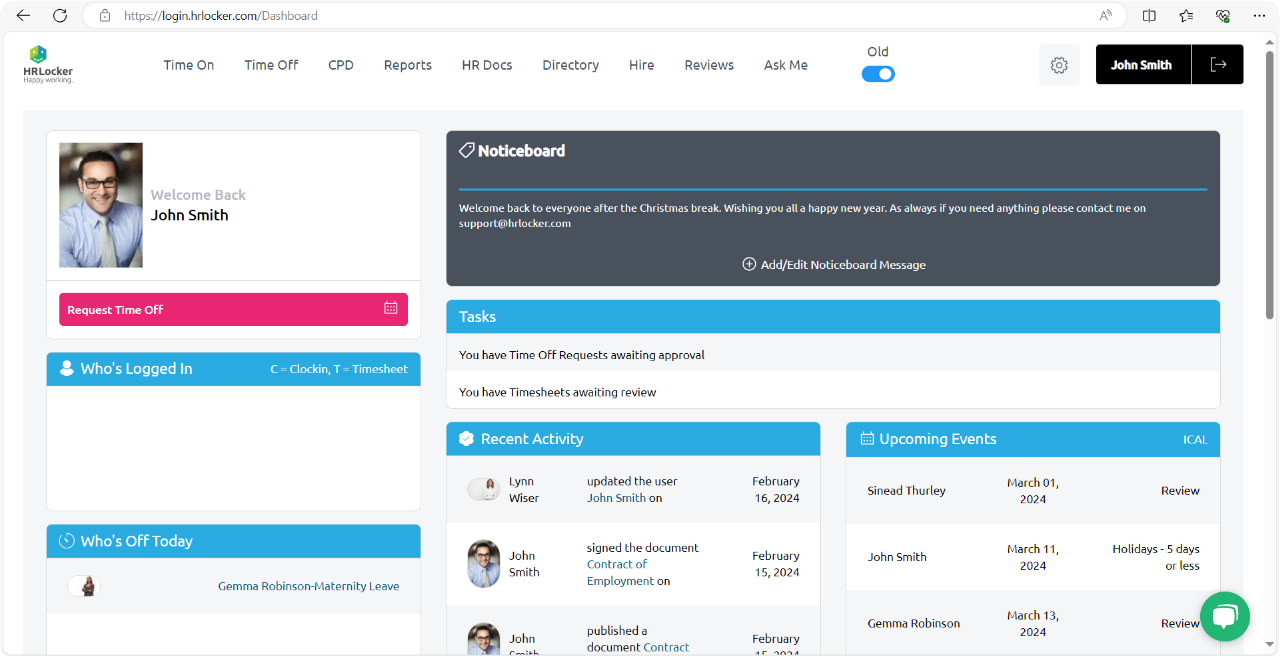
HRLocker dashboard

Centralise your HR processes inside HRLocker.

After building a career in HR, HRLocker CEO Adam Coleman decided to move back home to Ireland and set up a base in Lahinch. First, he worked as an HR consultant, and then in 2013, he bought the software that would become HRLocker.

Since then, we have onboarded over 30,000 users, empowering them to cut down on manual tasks and boost employee engagement and productivity.

Our software provides an all-in-one solution for streamlining compliance, managing the employee lifecycle and automating time-consuming, manual tasks.

With intuitively simple self-service tools for time-tracking and holidays, you give employees more autonomy and control over HR tasks, improving their experience while reducing your workload. In HRLocker’s centralised, GDPR-compliant platform, you can store unlimited amounts of data for WRC and HSA checks.

We assign you a dedicated customer care agent throughout implementation and beyond, so you can feel confident you’ll get responsive support from the moment you onboard and as you grow. You’ll also be able to access webinars, podcasts and how-to videos on key HR topics for extra guidance.

“The software is easy to use and users require very little training to get up and running. The system’s reporting feature has been further developed to allow for additional reports, which are useful for management review. Finally, the software is produced, developed and supported from County Clare, and we are happy to support Irish business.”

-Elaine B., HR and Payroll Manager

Features our partners love 

  • Compliance solutions to streamline processes for timesheets, holidays, sick leave and data protection and allow you to get rid of your paper-based system
  • An end-to-end recruitment and onboarding solution (HIRE)  for creating job posts, managing applications, conducting interviews and onboarding new hires
  • Timesheet tools that let employees log their own hours via mobile app and verify remote work with GPS tracking
  • Absence management tools that automatically track TOIL and schedule recurring leave
  • A performance management solution that provides real-time insights into continuous professional development
  • A project management tool that lets you create, assign and track projects

Pricing

HRLocker Plan Who’s it suited for? Pricing
HR Essentials Teams with 15+ employees –  for managing day-to-day HR operations & tasks €4/£3.50/$5
HR Professional Teams with 15+ employees – for managing your hybrid or remote team €6/£5.50/$7
HR Enterprise Teams of 250+ employees looking for flexible HR solutions Tailored quote

Pro-tip: Use our ROI calculator to work out how much money you could save by using HRLocker.
Return on Investment Calculator

What users say 

“From the start, the assistance from HRLocker support staff was fantastic. From initial testing of the software right down to full installation, the team at HRLocker could not have been more helpful, always ensuring we were happy. It has transformed our time and attendance recording to make it more professional and that of a modern employer,”

-Diarmuid C., Managing Director

Advanced
Advanced dashboard

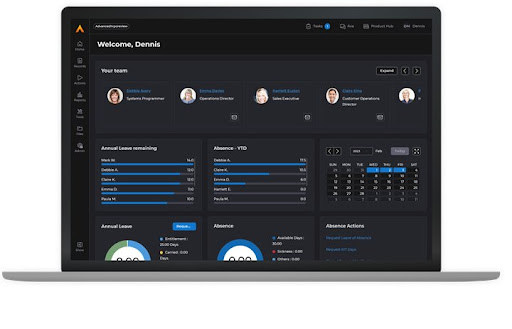
View absence metrics at a glance inside the Advanced HR system. Source

Advanced, acquirer of Ireland-based Advance Systems, provides HR tools to companies across the UK and beyond. The platform lets you centralise employee data and automate processes like TOIL allocation and time-tracking to take manual tasks off your plate.

Though the company no longer has a local support office in Ireland, its UK-based customer service team is available to provide support. And, like HRLocker, Advanced focuses on its customers as a key value and mission. The result of this is dedicated help with onboarding and tool integration.

Key features

  • A database for you to store employee training info and data
  • A time-tracking solution which allows employees to clock in and out
  • Automated shift allocation
  • Absence management tools and reports
  • A recruitment tool with candidate tracking

Pricing

Advanced doesn’t publish pricing information on its website. However, they offer a free demo and consultation.

What users say 

“Advanced has proven to be a very flexible system which we have been able to adapt to our ever-changing needs. We have found all support staff to be highly skilled, friendly and innovative,”

-Martina C., Solutions Delivery.

BambooHR
The BambooHR dashboard

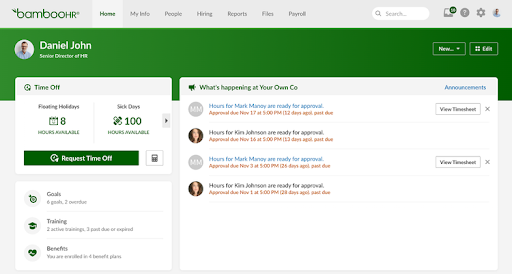
Easily view priority tasks inside Bamboo HR’s dashboard. Source

Established in 2008 by two HR professionals, Bamboo HR was created to “set people free to do great work.” This means it includes a whole host of automated solutions and easy self-service tools that take pressure off HR managers and give employees more control over tasks like leave requests and time tracking.

Because of this drive to make life easy, BambooHR is also simple to use and comes with great support. Though the company is US-based, they are highly responsive via email and over the phone. And you’ll get a dedicated project manager to support you throughout implementation.

Key features

  • A GDPR-friendly database where you can record employee information
  • Time-tracking tools and reports
  • A performance management solution that updates employees about their progress and wins
  • A recruitment tool to track applicants and onboard new hires
  • A self-service app where employees can log hours and request holiday

Pricing 

You can’t find pricing information on BambooHR’s website. You can reach out to a sales consultant for a quote.

What users say 

“Their customer service is very helpful and quick in responding and provide solutions to problems and issues as and when occurred. BambooHR has some great features as well, like I am now easily able to track the activities of my team members and subordinates,”

-Mayank M., Production Manager.

Access People HR

Screenshot of Access People HR

Get a clear overview of employee data inside Access People HR. Source

Access People HR is an intuitive HR management system (HRMS) that was created to grow with small businesses. As such, it includes easy tools for managing large amounts of employee data and automated solutions for time-tracking and absence management.

Founded in 1991, Access People HR initially served only the UK and now serves 49 other countries, including Ireland. Users get access to an online support community and what Access People HR describe as “rapid response times.”

Key features

  • A cloud-based database for storing employee information
  • A centralised recruitment and onboarding system that includes integrated document checking
  • A people-planning function to manage headcount
  • An app where employees can upload documents, book holidays and request HR support
  • Reports on metrics like absence and employee demographics

Pricing

Access People HR has four plans at £3 per employee per month (Essentials), £5 per employee per month (Professional), £7 per employee per month (Enterprise) and £9 per employee per month (Elite). The tool also offers a free trial.

What users say 

“Access People HR has a really straightforward interface that was quick to roll out across the organisation. We’re pleased that they’ve recently improved their customer support, with lots of guides available (e.g. for creating custom reports and workflows) and with quick response times to any enquiries that need further investigation.”

-Graham H., HR Partner.

Zellis
Zellis dashboard

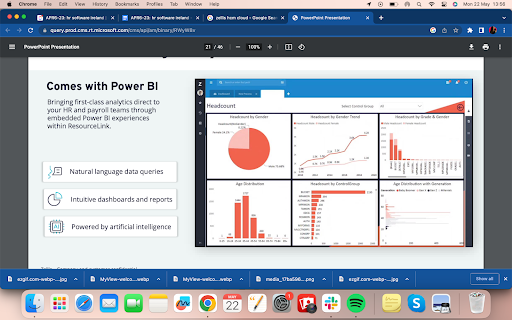
Export headcount and absence reports from Zellis’ dashboard. Source

Through integrations with tools like HCM Cloud, Zellis provides a comprehensive suite of HR services including payroll and consulting. Zellis provides expert support, but you can also pay to upgrade to an enhanced service.

An in-depth onboarding process means Zellis helps you outline and set business objectives to make the most of the software. Then, when using the platform to manage holidays and track time across projects, your employees can easily use the online help desk if they run into any issues.

Key features

  • Managed HR and payroll services
  • Recruitment solutions including candidate background checks
  • Time-tracking and resource-planning tools
  • A self-service portal for employees to book leave and submit expenses
  • Real-time reports

Pricing

Zellis doesn’t list pricing information on its website so you have to reach out for a consultation to get pricing information.

What users say

“The demo was very good and one that left me feeling excited about the future potential of our system. Better integration with other systems, faster performance, and improved analytics are all things that are high on our priority list as a business and should help us to work more efficiently.”

-Liam, H., People Rewards & Systems Manager

Creating Resilient HR Processes As You Scale

Automation tools are essential to saving time as your business grows. By handling mundane, manual tasks and centralising key data, they free you up to focus on employees and new recruits.

But when you’re looking for the ideal HR platform, you need more than just a set of tools – you need a partner who will understand your objectives, be responsive to the issues you’re facing and present you with solutions that address your needs.

HRLocker provides just that – a centralised database with a self-service module for your team, a range of automations and streamlined processes, and award-winning, locally-based customer support.


Book A Free Demo

Support your people and save time with HRLocker, an all-in-one HR solution based in Ireland

Frequently Asked Questions about HR Software in Ireland

What does HR software do?

HR software automates manual processes and centralises employee data. This means it normally includes tools for:

  • Storing documents
  • Reporting absence
  • Compliance management
  • Time-tracking
  • Leave management
  • Recruitment and onboarding
  • Performance reviews

Some HR platforms also offer self-service tools to further streamline processes. Inside HRLocker, for example, employees can track their own hours and request holiday.

What are the benefits of HR software?

HR software allows companies to save time as they manage projects, support employees and onboard new team members. By automating tasks and centralising key data, they reduce manual work, make compliance easier and give you time to focus on engagement and productivity.

What is the name of a company that makes HR software for Ireland?

HRLocker is a leading Irish HR software company. Based in Lahinch, County Clare, they provide support to over 30,000 users with an all-in-one platform that saves time by automating manual tasks.

You can store data, manage compliance, track employee hours, handle recruitment and onboarding and oversee performance reviews, all in one place. And, if you have any queries, you can reach out to the dedicated customer care agent that’s assigned to you at implementation.

5 Best HR Software Tools for Irish Companies was last modified: July 18th, 2024 by Jenny Martin

(more…)

4 min read

The European Union’s Artificial Intelligence Act (AI Act), passed by the European Parliament on 13 March 2024 and approved by the EU Council on 21 May 2024, represents a pioneering effort to regulate artificial intelligence comprehensively. The Act officially came into force on 1 August 2024. For businesses, understanding and complying with this new regulatory framework is crucial to ensure ethical practices and avoid legal repercussions.

What is the AI Act?

Overview of the European AI regulation

The AI Act is the EU’s first significant regulation on artificial intelligence, categorising AI systems into three risk levels: unacceptable, high, and low. Unacceptable risk AI applications are banned outright, high-risk systems face stringent regulations, and low-risk systems are subject to minimal oversight.

Importance of the AI Act for businesses

Compliance with the AI Act is not just about avoiding fines; it also positions your business as a responsible and ethical player in the market. With the increasing reliance on AI, adhering to these standards can enhance your reputation and build trust with customers and partners.

Key provisions of the AI Act: What businesses need to know

The Act outlines several critical requirements for high-risk AI systems. These include implementing a robust risk management system, ensuring data quality and governance, maintaining transparency about the AI’s operations, and allowing for human oversight. Businesses must take these provisions seriously to stay compliant.

Practical Steps for AI Act Compliance

Assessing your AI systems

Begin by evaluating your AI systems to determine if they fall under the high-risk category. This assessment involves analysing the potential impact of your AI applications on individuals and society.

Implementing risk management practices

Develop a risk management plan that includes continuous monitoring and mitigation of potential risks. This plan should be dynamic, adapting to new insights and changes in your AI systems.

man working in laptop

Enhancing data governance

Ensure that your data management practices are robust. This involves maintaining the quality and integrity of data used by your AI systems and ensuring compliance with existing data protection regulations.

Using AI compliance tools

Leverage tools designed to help businesses comply with the AI Act, such as the AI Act Compliance Checker. These tools can provide valuable guidance on meeting regulatory requirements and streamline the compliance process.

Training employees on AI compliance

Invest in training your employees on the ethical use of AI and the specific requirements of the AI Act. A well-informed team is crucial for managing AI systems responsibly and ensuring ongoing compliance.

Engaging with stakeholders

Transparency and open communication with stakeholders, including customers, partners, and regulators, are essential. This engagement helps build trust and ensures that your AI practices are understood and supported by those affected by them.

Benefits of Complying with the AI Act for Businesses

Complying with the AI Act offers numerous benefits. Firstly, it builds customer trust by demonstrating a commitment to ethical AI practices. This trust can translate into a stronger brand reputation and increased customer loyalty. Additionally, adherence to the AI Act can give your business a competitive edge, as consumers and partners are increasingly valuing ethical standards in AI deployment. Finally, proactive compliance minimises the risk of legal issues and potential fines, providing a safeguard for your business.

woman working in laptop in office

Future Plans and Updates for the AI Act

The AI Act is expected to evolve as technology advances and new challenges arise. The EU plans to periodically review and update the Act to address emerging AI technologies and applications. This means businesses must stay informed about any changes to the regulations and be prepared to adapt their practices accordingly. Keeping an eye on updates from the European Commission and engaging with industry forums can help businesses stay ahead of regulatory changes.

The EU AI Act and the Future of Business AI

The EU AI Act is a landmark regulation with significant implications for businesses of all sizes. For businesses, staying informed and compliant with the Act is essential not only to avoid legal pitfalls but also to build a reputation as a responsible and ethical business. By understanding the requirements of the AI Act and taking proactive steps to comply, businesses can navigate this new regulatory landscape effectively.

For more detailed information and tools to help with compliance, visit the EU AI Act website.

Staying proactive and informed will help businesses reap the benefits of AI while adhering to the highest ethical standards.

EU Artificial Intelligence Act Comes Into Effect, August 1st 2024 was last modified: July 29th, 2025 by Agile Communications

(more…)

3 min read

Timesheets are essential tools for accurately measuring employee clock-in times, monitoring time spent on projects, and ensuring compliance with the Organisation of Working Time Act (OWTA). Efficiently managing timesheets can enhance job satisfaction, streamline HR processes, and boost productivity. Here’s how you can make the most out of your timesheet system.

Automate Your Timesheet System for Better Time Tracking

Automating your timesheet system can save your organisation time and money. It reduces errors and simplifies the tracking of hours worked. This automation helps everyone involved quickly and accurately record their hours, update project data, and track tasks, leading to improved overall efficiency.

To start, selecting suitable software is crucial. Look for a system that integrates well with your current tools and meets your needs. HR software, like HRLocker, offers comprehensive solutions that ensure compliance and streamline HR tasks, including time tracking, attendance tracking, staff signing-in systems, and payroll exports.

To ensure effectiveness, provide thorough training for all employees so they understand how to use the system effectively. User-friendly interfaces make it easier for employees with varying technical skills to adapt quickly.

Encourage employees to manage their time with attendance tracking

Encouraging employees to manage their own time creates accountability and helps identify inefficiencies early. Self-service platforms enable employees to track hours, submit time-off requests, and manage their time off easily.

Introduce flexible working options for employees using timesheets

Flexible working options, such as remote work or part-time hours, can improve productivity and satisfaction. A well-managed timesheet system can help identify which employees or teams benefit most from flexible arrangements.

First, assess roles for suitability by using timesheet data to determine which roles can transition to flexible working effectively. Develop clear policies for flexible working arrangements and communicate them effectively to ensure everyone understands the guidelines and expectations.

Starting with trial periods can help evaluate the impact of flexible working, allowing for adjustments based on feedback and performance. Providing the necessary tools and support for remote work will guarantee that employees can perform their tasks efficiently from any location.

employee checking online timesheets

Ensure Compliance with the Organisation of Working Time Act in Ireland

In Ireland, the Organisation of Working Time Act (1997) mandates that employees do not work more than an average of 48 hours per week and are entitled to breaks and rest periods. Accurate timesheet data is crucial to ensuring your organisation adheres to these regulations.

The Workplace Relations Commission provides a more in-depth overview of the law on its 'Working Hours' webpage. In brief, it states that employees should not exceed an average of 48 hours per week over a reference period, typically four months. They are entitled to breaks and must have 11 consecutive hours of rest every 24 hours and a 24-hour rest period every seven days. Additionally, employees are entitled to at least four weeks of paid annual leave.

To ensure compliance, conduct regular audits of timesheet data to verify adherence to working hours, breaks, and rest periods. Providing training for all employees and managers on their rights and responsibilities under the statute helps maintain awareness and compliance. Maintaining accurate records of hours worked, breaks taken, and annual leave is essential. Automated timesheet systems can help maintain precise and easily accessible records that prove compliance.

By implementing these strategies, you can maximise the benefits of your timesheet system, ensuring efficient HR processes and a more productive workforce. 

How to Make the Most Out of Your Timesheet System with Time Tracking and Compliance was last modified: August 1st, 2025 by Agile Communications

(more…)