Author: Dee

10 min read

Tracking sick leave, holidays, and TOIL with Excel sheets is time-consuming and can lead to costly mistakes. But with absence management software, you can automate repetitive tasks, implement intuitively simple self-service processes and gain more time to engage and support your team.

Besides, filling up filing cabinets with years’ worth of internal documents simply isn’t sustainable for a growing business. With the right software solution, you can compliantly manage data in the cloud and get back your office space.

In this article, we explore what to look out for in absence management software, how to automate key processes like calculating TOIL, simplify tasks like managing approvals, and what you need to stay compliant as you grow.

Finally, we share our top five recommendations with reference to these key criteria.


Book A Free Demo

Save time, reduce errors and stay compliant with an all-in-one HR and absence management solution.

What to Look For in Absence Management Software

A great absence management solution will save you time and reduce manual errors. So, we look at HR software that centralises and automates processes like holiday requests, time-tracking and reports, while ensuring you stay compliant.

These are the criteria we consider: 

  • Ease of use: We review how intuitive each platform on our list is and look at the level of support offered during onboarding and beyond.
  • Self-service tools: We examine which solutions offer apps that enable employees to easily submit requests and log time off, as well as for managers to approve leave.
  • Automation: We consider which solutions allow you to manage absences with less manual work.
  • Integrated calendars: We evaluate tools that provide full visibility over headcount.
  • Easy payroll management: We explore which centralised solutions allow you to export payroll data efficiently and error-free.
  • Compliance: We appraise tools that provide solutions for effective compliance management.
  • Scalability: We assess tools that automate processes and are cloud-based to accommodate large volumes of data.
Pro-tip: Quickly calculate your employees’ annual leave entitlement with our holiday calculator. This tool works for staff with fixed shift patterns and those whose hours vary.

The 5 Best Absence Management Software Solutions

Here are our top 5 recommendations for HR software solutions to streamline absence management. We look at user reviews, pricing information and features from the criteria above.

HRLocker

HRLocker is a comprehensive, cloud-based HR solution that dramatically reduces the time you spend managing absence and compliance. In one place, you can store an unlimited amount of data, manage timesheets, and review sick leave reports to better support your employees.
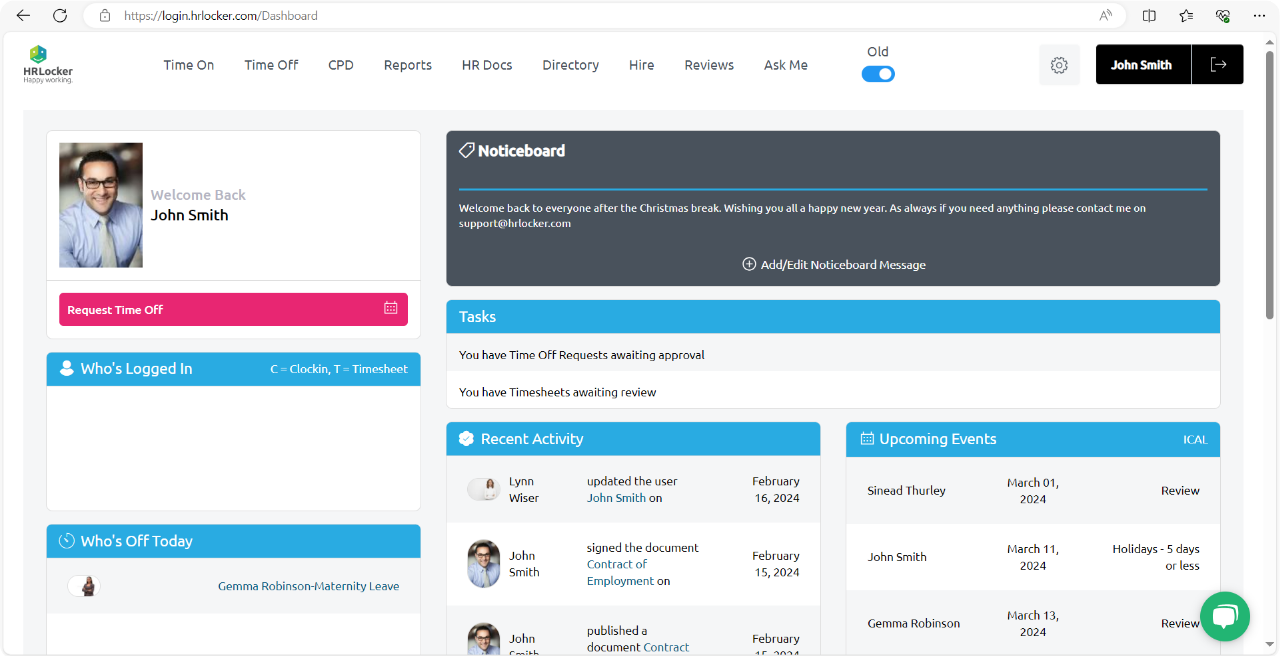
HRLocker dashboard

Create more accurate reports by logging absences with customised leave types.

Our automated tools manage TOIL, recurring leave and national holidays, and provide a simple workflow in the platform for requests and approvals. In the self-service HRLocker mobile app, employees and managers cannot only manage their holidays but also get an instant overview of key information.

So, the team have visibility over what they’re entitled to, managers can easily plan, and you have fewer manual tasks to handle.
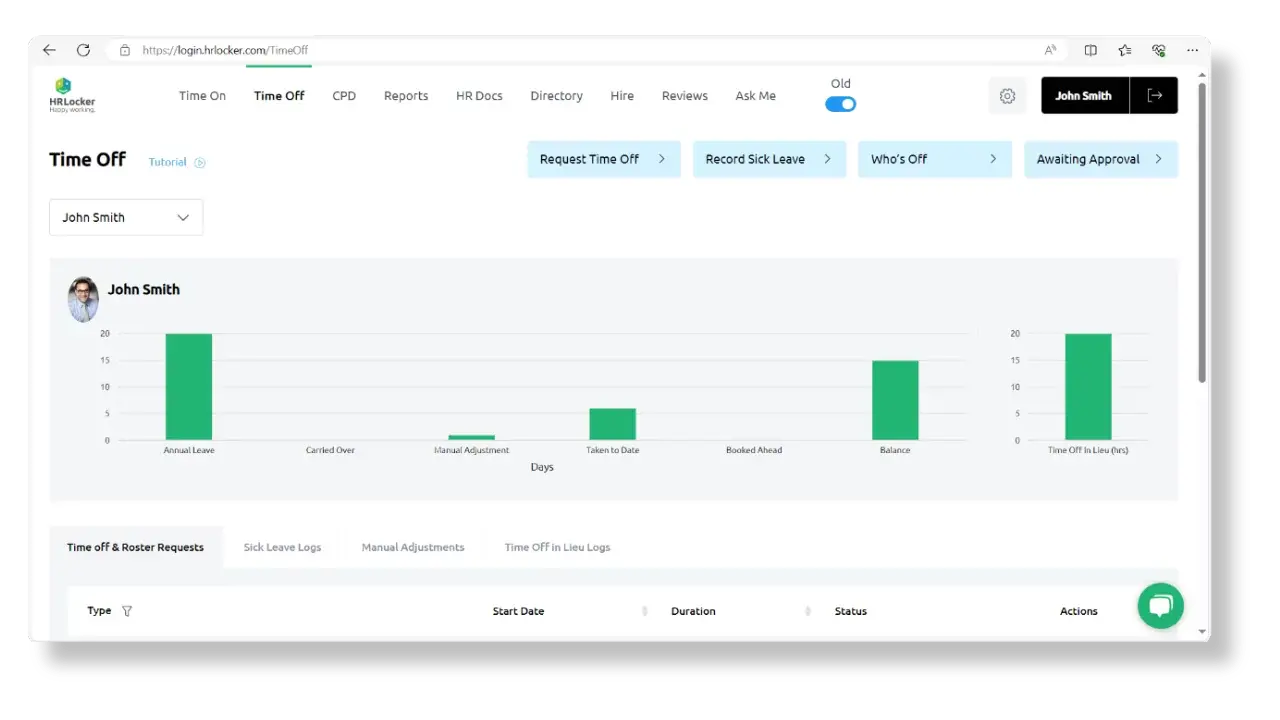
HRLocker Time Off

Gain an instant view of days off and make manual changes in HRLocker’s intuitive dashboard.

HRLocker’s system is suited to organisations of all sizes and is easy to implement and manage. You’ll be assigned a dedicated Implementation Specialist to help set you up, and you’ll have access to a range of free webinars, podcasts and how-to videos.

What users say

HRLocker users love the platform’s simple interface and find it saves them time when meeting compliance requirements:

The software provides an efficient yet simple platform to easily manage and comply with all our HR responsibilities. HRLocker makes it easy to monitor all annual and sick leave taken by staff, ” Brendan, Principal.

This is the third organisation where I’ve used this software (I introduced it in all three). It’s an easy way to manage employee leave and other HR details,” Hilary D., HR Manager.

Pricing

HRLocker offers three pricing options. These are:

  • HR Essentials Plan. Priced at €4/£3.50/$5 per user per month, choose this option if you have more than 15 employees and need to cover all your basic daily tasks.
  • HR Professional Plan. Integrate your pension software, access more time-tracking tools, and add error-free payroll and our CPD module for €6/£5.50/$7 per user a month.
  • HR Enterprise Plan. Companies that require flexible HR solutions for a team of over 250 can opt for a bespoke package that includes features such as preliminary payroll, an AI chatbot, and an account manager. 

Key features

Within HRLocker’s all-in-one HR solution, you’ll find:

  • A centralised, GDPR-compliant database for you to store absence information without the need for Excel sheets or physical storage
  • A self-service mobile app that cuts out your manual work by enabling employees to book time off, automatically set up recurring leave and upload documentation
  • Automated tools assign recurring leave and mark national holidays to save time when calculating TOIL
  • Error-free preliminary payroll reporting to streamline the employee timesheet and payroll exporting process
  • Easy manual controls so you can add and remove sick/vacation days and customise statutory leave types
  • Charts that improve visibility for managers by providing a clear view of days taken and the remaining balance
  • Reporting and analysis to keep you compliant and review absences across the team at a glance
  • Integrated HR tools so you can onboard employees, manage performance reviews, and oversee projects all within the same platform
  • Award-winning customer care, dedicated onboarding assistance and free professional learning resources 

Timetastic

Timetastic is an absence management platform that was founded by team managers-turned-software developers in 2014.  With a dedicated offering of time-tracking tools and reporting features, it’s well-suited for small businesses seeking a simple way to manage holidays and sick leave.

Employees can request time off, managers can approve, and everyone can view the status in the centralised work calendar.  Its app also offers the same functionality and is very easy to use, making it a great solution for flexible teams on the go.
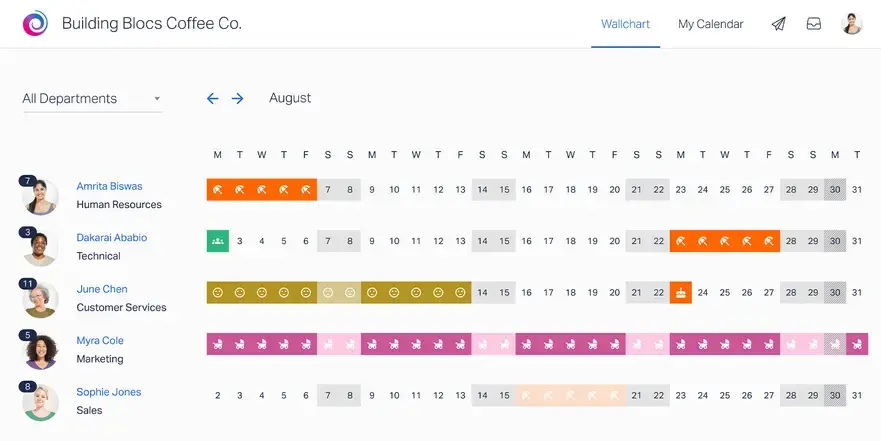
HRLocker Time Off

You can include company branding inside your Timetastic tracking solution. Source

What users say

Timetastic eliminated time-consuming spreadsheets. Now employees and supervisors instantly know their balances,” Philip P. (Chief Operating Officer).

Pricing

Timetastic offers a free one-month trial, followed by a flat rate of £2/month per user for its plan that includes absence management.

Key features

  • Holiday calendars for your team to track absences and plan the year ahead
  • An app where employees can request time off and managers can approve it
  • Automated tools to ensure national holidays are visible to the team
  • Reports on annual TOIL allowances and absence trends

Access People HR

Access People HR is a solution that started as a payroll tool but is now better known for its extensive HR system. It’s particularly well-suited to large companies because it offers cloud-based storage that can handle a large amount of information and data about employee absences at scale.

Companies working in industries with a high risk of injury, such as construction, may also find Access People HR’s enhanced support for return-to-work procedures useful. These ensure employees across departments are treated consistently and fairly when they return from extended time off.
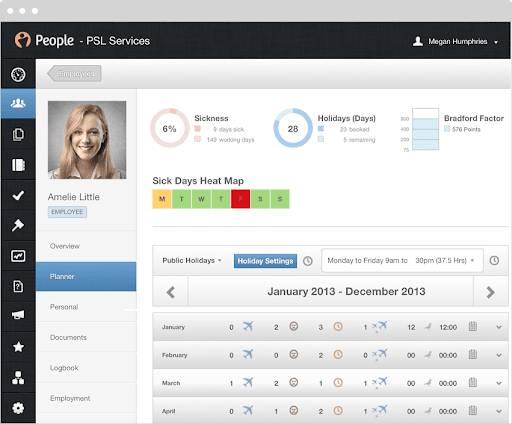
Screenshot of Access People HR

Gain an instant overview of who is out each day with Access People HR. Source

What users say

Access People HR has a straightforward interface that was quick to roll out across the organisation. We’re pleased that they’ve recently improved their customer support, with lots of guides available (eg for creating custom reports, workflows),” Graham H. (Human Resources Partner).

Pricing

Access People HR offers four packages, ranging from £3 to £9.50 per employee per month. All four come with absence management tools, but for the ability to customise the solution to suit your specific needs, you’ll need to opt for the higher package.

Key features

  • An app that employees can use to request holidays and upload documentation
  • Automated tools for employees to log hours and managers to approve absences
  • Absence planner to view each employee’s record and heat maps to visualise employee time off
  • Return-to-work support which guides both employees and managers through the process to ensure compliance
  • Payroll integrations that streamline data exporting

Breathe HR

Breathe HR was founded in 2012 to help companies spend less time managing HR processes. As such, it includes a suite of tools for time-tracking, holiday requests and reporting. 

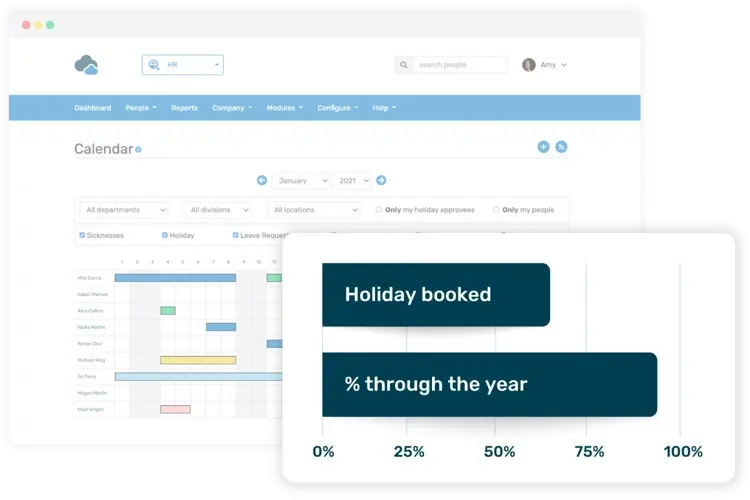
Their absence management solution is particularly suitable for organisations that use shift schedules because of the integrated rota. With this, you can gain an instant overview of which dates you need to increase your headcount. You can also set 'blackout dates' where employees can’t take time off, for example, during a particularly busy project.
Screenshot of Breathe HR

Analyse absences by leave type inside Breathe HR. Source

What users say

Each employee has their own area, holiday/work related documents/review requests all held in one place. Our department managers are spending under 10 minutes a day on managing holiday/sickness,” David C. (Operations Manager).

Pricing

Breathe HR provide a free 14-day trial. Then, to access rota and absence management solutions, you’ll pay £22/month per business. 

Key features

  • A centralised solution to store absence data
  • An app where employees can request holidays, log sickness and view company policies
  • A manager dashboard where you can view days off on a calendar
  • An integrated rota that pulls through the absence of information
  • Visual reports which allow you to see how much holiday has been taken by each department

Bright HR

Bright HR is a leave management platform owned by the larger HR services and software company, Peninsula Group. It was founded in 2015 to help HR managers stay on top of compliance more easily. For this reason, like HRLocker, it includes a centralised database where employees can upload their own documents.

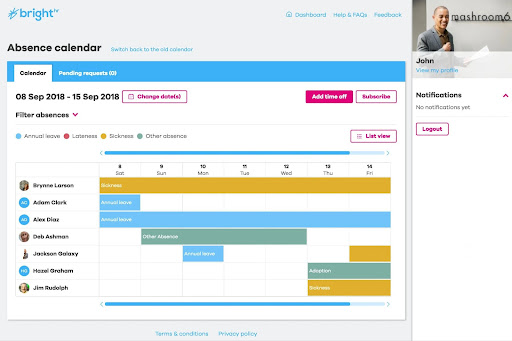
With enhanced functionality for monitoring lateness, it’s also a good solution for large organisations working with high-pressure deadlines. In just a few clicks, you can see if there are employees who often fail to come in on time.
Screenshot of Bright HR’s absence calenda

Navigate between two absence calendar view types inside Bright HR. Source

What users say

It keeps all of the information in an easy-to-use space and helps reduce the amount of paper needed for records. The leave request system is great and being able to notify staff when you’ve uploaded documents removes the hassle of ensuring everyone receives the information,” Aaron O. (Financial Director).

Pricing

Bright HR’s packages start at £11.20/month per employee and increase depending on the level of support you require. You also pay extra for custom add-ons.

Key features

  • An app for employees to send documentation and notify managers of sick leave
  • A holiday calculator which tracks entitlement and flags potential clashes
  • The ability to log lateness and review real-time reports about absenteeism 
  • A large database where you can accurately track employee absence with customisable types of absence

Absence tracking in a growing team 

HR software allows you to stay on top of tracking holiday entitlement and storing relevant data without spending hours filling in spreadsheets or filing paperwork. However, the best solutions will also automate processes and introduce self-service solutions, allowing you to step back and focus on ensuring a great employee experience.

With HRLocker, employees can upload their documents and request time off. Managers gain an instant view of absences and can easily make approvals. You can also review timesheets, automate TOIL calculations, and mark holidays.

What’s more, if you have any questions as you onboard or digitise your processes, our award-winning support team are always on hand to help.


Book A Free Demo

Save time, reduce errors and stay compliant with an all-in-one HR and absence management solution.


Frequently Asked Questions About UK Absence Management Software

What is absence management software?

Absence management helps businesses track and manage leave by automating tasks, providing a space for employees to request days off, and offering a centralised location for employee data and company policies.

HRLocker, for example, includes automatic TOIL calculation, a GDPR-compliant space for absence reports and a self-service mobile app where employees can book time off, set up recurring leave and upload documentation.

How do you manage absence in the workplace in the UK?

To meet employee laws, organisations in the UK have to record all employee absences, including the reason for each case. They then have to store this data for six years. So, managing absence efficiently means creating a centralised location for employee data and making sure employees have an easy way to request time off.

HR departments also need to ensure that statutory minimum holiday requirements are met and that managers have an easy way to review absence data.

Software like HRLocker makes all of this easy with a self-service portal for employees, extensive reporting and automated holiday calculation.

What’s the most effective way to track employee sickness and leave?

The most effective way to track employee sickness and leave is through absence management software and all-in-one HR software like HRLocker. This allows employees to easily request time off and managers to quickly approve or deny those requests. It also automates tasks, provides a centralised platform for tracking absence and creates reports for compliance.

What’s the best way to calculate and manage Time Off in Lieu (TOIL)?

The best way to calculate and manage Time Off in Lieu (TOIL) is to use absence management software that incorporates automated tools. By pulling information from timesheets, these will track overtime and non-standard hours and calculate time off entitlement based on company policy. Once TOIL is assigned, the software can track how much time off an employee has accumulated and when it’s been taken.

5 Best Absence Management Tools for UK Companies was last modified: July 22nd, 2025 by Agile Communications

(more…)

9 min read

Not so long ago, diversity, equity and inclusion (DEI) was a minor consideration tucked away under the HR umbrella. Now, it’s a massive business priority at the heart of organisational strategies.

To coin a phrase, DEI is the secret sauce that makes companies thrive. But beware. It’s not just about ticking boxes or hitting quotas. Nope. DEI is about creating a workplace where everyone feels like they belong—where they can bring their whole selves to work without fear of judgment or bias.

You might wonder why it matters. Well, when companies ignore DEI, things get messy. Imagine a workplace where fairness and equality are akin to the office plants that nobody waters. They wither away, and toxicity creeps in. Not a great vibe, right?

Yet, unlike neglecting the unloved office palm, the consequences aren’t just emotional. If an organisation brushes off its DEI responsibilities, it can find itself in hot water. Legislation, including the Irish Employment Equality Acts 1998-2015, means firms face hefty fines, legal battles and reputational damage.

Fear not! There’s hope. Achieving a truly diverse and inclusive workplace is similar to assembling a jigsaw. And here, you’ll find all the pieces of the puzzle. But first, here’s a quick recap…

What DEI Is (and Isn’t) All About

Diversity: Imagine a team where everyone brings different skills, backgrounds, and perspectives. That’s diversity. It’s like a recipe; each ingredient - age, gender, ethnicity, ability – matters. And when we mix it up, we create a rich work environment.

Equity: Think of this as fairness. It’s not about treating everyone the same. It’s about giving everybody what they need to succeed. Equity levels the playing field by providing a boost. It’s the stepping stool that lets 5’3” Ashley access files on the top shelf as easily as 6’2” Sam.

Inclusion: This is about creating a sense of belonging. It provides a warm and welcoming environment to everyone. Imagine spotting someone standing alone in the corner at an office party. Inclusion says, “Come and join us, you matter.”

office meeting DEI

Diversity, equity and inclusion are comparable to the three musketeers. Each is powerful in its own right, but when working together, they’re an unstoppable force. Joined together, DEI makes a workplace where everyone thrives.

But be aware.

Far from slapping a rainbow sticker on the office door, true DEI is about understanding and dismantling barriers that keep some people from fully participating in employment. It’s about creating policies, implementing training, and having open conversations.

It needs a genuine commitment from everyone involved. And it needs you to be a DEI champion!

HR’s Essential Role in Championing DEI

What you need to do to ensure DEI varies from workplace to workplace. If you work at a massive multinational corporation, you’ll probably find yourself having to do a lot more than if you work at a small business with only a handful of staff.

However, while practical steps may be different depending on an organisation’s size and employee base, there are some helpful best practices and implementation approaches we can all follow.

1. Promote the right approach: Focus on overcoming barriers

To fully understand the role of barriers, we have to look at employment through a social justice lens (we explore this in more detail in our DEI whitepaper).

From this perspective, when we see someone struggling to get a job even though they have the necessary skills, qualifications and experience, we don’t look at their individual characteristics—age, gender, sexual orientation, family status, socio-economic background, or ethnicity. We look at what’s directly, or as is often the case, indirectly preventing them from being hired.

These factors include highly visible, often physical issues. For instance, buildings without ramps and elevators that prevent access for people with mobility issues. Or the need for a car to travel to office buildings that are off the beaten track without public transport provision.

Other factors are less obvious and not so tangible. Large gaps in CVs because of care responsibilities or periods where a person is waiting for the right to work, for example. Or even more insidious internal issues, such as unconscious biases and inherently discriminatory practices that exclude certain marginalised groups.

Others still are a bit of both. For example, language and communication difficulties paired with a lack of supportive infrastructure. Or negative perceptions and attitudes stemming from poor recognition when it comes to alternative skills and experiences.

When we recognise and understand that it is these factors that stand in the way of a diverse, equitable, and inclusive workforce, we can start to look at ways to overcome them. That is to say, we can begin to break down these barriers.

inclusion in the workplace

2. Foster an inclusive culture: Build a DEI framework

When it comes to a company culture that values diversity, equity and inclusion, you can’t just press a button and switch it on (unfortunately). It takes a planned and systemic approach.

To do this, we have to move beyond reactive responses. We have to stop just dealing with issues and implementing workarounds in the short term and start focusing on sustainable solutions.

First off, you’ve got to have a long-term goal. Something along the lines of wanting to eliminate discrimination, achieve equity, and promote diversity. And, going back to the social justice perspective, we want to do this by identifying and breaking down barriers to employment.

The Irish Human Rights and Equality Commission offer a handy seven-step framework for fostering an inclusive culture. Here’s a summary:

I. Implement robust DEI policies – this is where you set out your workplace’s commitment to defined standards that all employees must abide by.

II. DEI education and training – here, you enable staff at all levels to understand and achieve the standards set out in your DEI policies.

III. Assign responsibility for DEI – now you put someone (a person or team) in charge of driving the agenda and being a valuable point of contact.

IV. Create a DEI roadmap – lay out your specific objectives and the steps that will be taken to achieve them.

V. Undertake DEI assessments – this way, concerns are brought into the heart of organisational decision-making.

VI. Gather DEI data – collect and analyse data about protected characteristics under equality legislation to identify risk areas.

VII. Encourage participation – involve people with diverse backgrounds and needs in governance so their voices are being heard and used to inform policies, procedures, and practices.

inclusion in the workplace

3. Implement best practices to proactively boost DEI

DEI best practice starts and ends with HR. From posting a job ad to recruitment and offboarding, HR touches every part of the employee journey and is responsible for the employee experience throughout.

Here are some practical steps you can take today to help boost DEI in your organisation.

Analyse job descriptions, advertising and onboarding processes. We’ve all been put off applying for a job because it sounds so much more complex than it really is. Instead, use plain language and make it as accessible as possible throughout your recruitment process. Think about providing alternative formats, like large print or translated versions. That way, potential recruits won’t be discouraged.

Audit existing policies and fine-tune procedures. Look at where you are now and where you want your DEI efforts to go. How inclusive was your last recruitment campaign? Are any groups underrepresented? What could you do to better attract diverse candidates? Maybe you need to look toward a competency-based valuation rather than the conventional assessment of qualifications and experience.

Go beyond basic training and gather feedback. Unconscious bias and awareness training unquestionably have a place, but it might not be enough. Do all of your people leaders feel like they fully understand and feel confident about recognising and removing barriers to inclusion? How do you know? Have you asked them or even gathered feedback from them to see how effective they found the training? It’s something to think about.

Engage with DEI advocates. As HR professionals well know, people are an organisation’s best asset. It’s the same when it comes to DEI. If it’s appropriate, set up employee resource groups (ERGs) where people can share their experiences and expertise with other employees and, in so doing, put a human face on DEI.

Nurture relationships and signpost support organisations. If ERGs aren’t practical in your workplace, look to external groups like employee advocacy and inclusion charities. You’ll also find they’re often more than happy to come in and give a talk or provide resources like leaflets and links to helpful websites for free.

Explore alternative participation options. Look for other ways of getting people into employment. Have you considered internships, placements, apprenticeships, and training programmes? They’re all great ways of helping people to develop skills, adapt to working and build a career path.

The Benefits of Championing DEI

If you’re still in any doubt as to why you should champion DEI, here it is in a nutshell.

For employees—DEI has a massively positive impact on employee experience and wellbeing. An inclusive workplace provides all the elements needed for an exciting, innovative and progressive environment where ideas flow and workers flourish.

For the organisation—When your workforce is diverse, you can better serve the diverse population that makes up your stakeholders. That's why DEI significantly improves organisational performance across talent acquisition, decision-making, customer insight, employee motivation, brand image, market share, and risk reduction.

For society—DEI-positive workplaces also open up the labour market to underrepresented groups, expanding participation to channel more money into the economy and reduce the burden on the state. In addition, workplace DEI helps to develop and reinforce a society that values human rights, dignity and diversity.

DEI in the workplace

Championing workplace DEI is no small task. You need to create a comprehensive framework that includes policies, training programs, and open communication channels.

You must work with employees at all levels to foster an inclusive culture and actively dismantle barriers that hinder diversity and equity.

Ultimately, by championing workplace DEI, we create environments where every individual feels valued, respected, and empowered to contribute to the success of individuals, organisations, and society as a whole.

Learn more about championing workplace diversity, equality and inclusion

Watch our webinar Mastering DEI in the Workplace

Listen to our podcast Diversity, Equity, and Inclusion: Navigating Challenges, Driving Change and Measuring Success in the Future of Work

Download our whitepaper Diversity, Equity, and Inclusion

Links to more support and information

Irish Human Rights and Equality Commission – Ireland’s national human rights and equality institution.

Citizens Information – Provides comprehensive information on public services and on the entitlements of citizens in Ireland.

Workplace Relations Commission – An independent statutory body responsible for workplace relations and compliance with the Workplace Relations Act 2015.

The Labour Court – Ireland’s industrial relations tribunal.

Intreo – The Irish Public Employment Services (PES), part of the Department of Social Protections, is the single point of contact for all employment and income support services.

National Disability Authority – An independent statutory body that provides evidence-based advice and research to the Government.

Open Doors Initiative – Provides opportunities to some of the marginalised members of Irish society, creating pathways to work.

Pathways to Progress – Aims to resource people from a migrant background to find work and pathways to employment.

Employers for Change – An employer disability information service.

Towards Work – The central point for people with disabilities in Ireland to access resources and support in their journey toward employment or entrepreneurship.

Championing Workplace Diversity, Equity, and Inclusion (DEI) was last modified: July 29th, 2025 by Agile Communications

(more…)

1 min read

So many of our standard practices have had to change since Covid-19 dictated that we are to work remotely. If we can, that is. A lot of questions arise around the day-to-day running of the business, each office, each department, and in turn each employee.

(more…)

4 min read

You’ve seen the news and heard the buzzword. Workers are dissatisfied with their jobs and are silently protesting. Unlike The Great Resignation, they’re not leaving their employers in search of better development opportunities; they’re staying – Quiet Quitting is in full swing. 

But what can companies do to counteract this trend? Would we see more workers happily engage with their work if it always feels fresh and exciting? 

How Can Employers Prevent Quiet Quitting?

Research says, yes. According to a recent Work Institute Retention Report, one of the main reasons employees are dissatisfied is a lack of career development. By providing workers with the opportunity to expand their skills, employers can not only energise their best staff but also plug skills gaps in their company with existing talent. 

Now, I’m not saying there aren’t more obvious and critical aspects that need addressing if your workforce is currently resigned to doing the bare minimum. In this instance, you really need to examine your organisation from top to bottom and reassess your policies and practices. Learning and development aren’t a silver bullet antidote to the Quiet Quitting pandemic.

What I am saying, though, is that as part of a risk mitigation strategy wherein you bolster productivity, providing colleagues with the opportunity to learn, develop, and grow in the workplace is a way of immunising your personnel against Quiet Quitting. 

Don’t just pitch these opportunities to existing staff, either. Learning and development is an additional string to your employer value proposition (EVP) bow. Now more than ever, potential recruits are looking for personal growth in their next job. For Gen Z, the next big demographic to join the jobs market, learning and development is a top priority

Of course, how these initiatives are delivered will depend on your industry, the needs of your staff, and your business goals. Employers should assess their teams’ current skill levels and determine the desired skill level they’d like employees to reach. For example, if you’re a small business rapidly shifting operations to the cloud, your employees’ digital skills are the first thing you’ll want to upgrade. 

Make sure you also consult with your employees to figure out what takes their fancy. If an employee is interested in a lateral move within your company, you’ll want to ensure training opportunities outside the scope of their usual job are available too. 

To reap the full reward of L&D, programs need to be accessible to everyone. Otherwise, you risk alienating members of staff who wish to develop but don’t have the means. Employers should implement a combination of social learning (learning on the job, through others), on-demand learning (resources, apps, and e-learning platforms), and individualised learning (from industry experts in person, via podcasts, and in written formats). 

For businesses experiencing uncertainty, because of the cost-of-living crisis, looming recession, and slowdown in investment, digital learning is likely to be the safest bet. Fortunately, it’s also one of the cheapest and most impactful ways of delivering learning. 

Reap the Rewards

The CIPD 2021 Learning and skills work survey shows businesses with a sophisticated approach to technology in L&D are more likely to have a supportive learning environment. In turn, this inspires a greater desire for learning and development, enhancing the supportive environment further. One big, beautiful circle of learning and engagement! 

The benefits of well-designed and delivered L&D are ample for employers and employees alike. When teams are equipped with the skills to take on bigger and bolder challenges – like the ones experienced during the pandemic – leaders can task them with a range of new, exciting opportunities that keep their role feeling fresh and inspiring. At the same time, employers future-proof their business by cultivating multi-disciplined employees who are more adaptive to change.

With more skills, employees can engage with a broader variety of work. Through learning initiatives, particularly social ones, co-workers can build strong relationships that transcend training and enhance the working culture. 

Learning and development offer an inoculation against Quiet Quitting and embrace The Great Upskilling. After all, research shows that a juicy paycheck is no longer the number one priority for employees, especially the younger generation, who prioritise opportunities to develop above the noughts on their salary. 

So next time you’re reviewing your L&D approach, set aside a little more budget. It might just be the best investment you make for your current team and future talent. 

Why Learning and Development is a Vaccine Against “Quiet Quitting” was last modified: July 22nd, 2024 by Jenny Martin

(more…)

2 min read

What is SSO?

Single sign-on(SSO) software allows a company to have frictionless access to all its vital applications used for business purposes. 

With the level of personal and company data at risk in HR or recruitment functions, this is a vital area for anyone in people management to address under their data protection obligations.

So what are the advantages of SSO business software to an organisation and its employees?

devices and data looked with chain for blog post about single sign on for hr software security

Benefits of SSO for Organisations

Control is given back to the IT department: IT can control password resets, password change frequency and timeout periods according to their internal information security policies. At the click of a button, IT can enable or disable the whole organisation or a single employee working onsite or remotely. 

Security and Compliance: Under SSO, organisational control of access can fall under your internal or regulated company policies rather than those set by the service provider or your employees. Employee onboarding and exits can be easily managed with full security control over vital information and access to sensitive data, which is vital under GDPR.

Pic of multiple devices for blog post about how single sign on can enhance security for hr software


Benefits of SSO for employees

Ease of access: SSO enables employees to access all official applications required for day-to-day work and HR administration.

No need to remember multiple passwords: Security breaches can be further avoided since there’s reduced risk from multiple password information being exposed in external documents or devices. SSO requires two-factor authentication, which further enhances access control.

Remote workers: Any employees working offsite can still access all official applications, regardless of location, with the same security standards as onsite staff. Similarly, IT can remotely control the access that external employees have to data

It's worth noting that, in addition to or as an alternative to Microsoft Active Directory (AD), HRLocker customers who plan to, or already use Okta to carry out these kinds of Identity Management (IDM) controls, can now avail themselves of the HRLocker Okta integration.

Single Sign-on HR Software was last modified: August 7th, 2025 by Agile Communications
(more…)

5 min read

Since GDPR became law in 2018, organisations have experienced rapid digitalisation and disruption.

A combination of technological advancement and a pandemic that changed the way we work forever has made HR a digital and data-focused affair. And even if you’re using top-of-the-range HR software, you can still breach GDPR rules by failing to acknowledge the new data flowing into your organisation.

Changes to working culture and policy mean organisations’ compliance practices are fast becoming out of date. Plus, the number of data points around each employee is increasing dramatically, and that means HR professionals need to ensure they’re adhering to GDPR.

If this is the first time you’ve thought about GDPR since the regulation came into force, it’s high time your organisation reviewed and updated its approach to data protection.

What GDPR Means For HR Professionals Today

The HR vertical has become increasingly dependent on data, with employee information often at the heart of strategy and decision-making.

Instead of paper files, many organisations operate with an HR platform that hosts private information. Often, these platforms give you the option to collect and manage even more data than ever before. Businesses are no longer constrained by the amount of room they have for filing cabinets.

Organisations collect employee data for financial, operational, and security purposes. But they also collect it to enhance employee experience, boost engagement, and create a better working environment. For example, knowing the proportion of employees with a certain disability or specific need can help employers make reasonable adjustments and design inclusive policies.

And now that employees are distributed across the world as remote working gains traction, private information is at an increased risk of distribution, too. Where once, employees working from the same office would have been using the same internet infrastructure and organisational security systems, nomadic and home workers are reliant on their own internet connection and protections.

Cyber Security

If employees are handling sensitive information from several locations, HR teams need to propose policies, systems, and security infrastructure, such as encryption, to help ensure that data remains secure. HR teams will likely need to collaborate with IT or cybersecurity professionals to decide the best compliance and governance solutions.

Remote working isn’t the only thing that has implications for GDPR. The previous requirement to test and track coronavirus cases to prevent the spread of infection means many employers have collected and distributed employee health data. Organisations with vaccine mandates are keeping vaccination records too – adding to the already enormous mountain of employee data.

GDPR presented fresh challenges for organisations in 2018. Now, one pandemic and a considerable level of digital transformation later, HR teams are rethinking their approach to data governance.

How to Make HR GDPR Compliant

HR teams have access to a plethora of data about employees. GDPR requires that companies limit the amount of information they collect, keep it in a secure place, destroy it when there’s no justifiable reason for it to be kept, and ensure all data is accurate and complete.

The first step towards getting a handle on your HR data is to bring it together in one place. Personal information is less likely to go missing when it’s stored centrally, and the data you collect will be easier to find and report on.

Some organisations might benefit from hiring a data protection officer. Especially companies where data plays an integral role in their business model, for example, a software company that provides personalised experiences based on users’ data.

GDPR

Back in 2018, GDPR was a hot topic. Many companies would have introduced learning programmes and training to ensure workers were up-to-speed. Since then, the regulation could have easily slipped employers’ minds.

But for the reasons we’ve already explored, GDPR is an ongoing task. Companies should be conducting training sessions for all employees, regardless of how much data they come into contact with. Operating a compliant business demands that every single employee is aware of data protection and their role in upholding it.

Continue to inform employees, new and old, about how your organisation uses and manages their data. Your people have a right to know how their data is being processed. But they also have a right to be forgotten and have their data destroyed when there’s no justifiable reason for it being kept.

A key tenet of GDPR is that the data kept should be complete and correct. Giving employees agency over their data will help you maintain this. Encouraging them to update and manage their data in your HR software shows them that you trust them and that you care about how their information is managed.

According to Gartner, when employees are informed about why and how their employer gathers their data, and feel confident that it’s protected, they’re willing to work harder for the organisation. Nearly 80% of respondents who are treated this way – as data partners – are willing to put in more effort to get the job done.

How HRLocker Bolsters Compliance

Making sure your HR data is protected and aligned with GDPR is a hefty task – but one that’s made much easier with the right software. As we’ve explored before, software isn’t a standalone solution to GDPR. It has to go hand in hand with good policy.

Platforms such as HRLocker allow employees to upload and update their personal information, including emergency contacts, images, and addresses. Managers can customise their teams’ permissions in the employee database, so team members only have access to specific data points.

Keeping your employee documentation up to date is a necessary, but often laborious task. It’s one of the reasons we created the functionality to publish documents to your employees based on their office, department, teams, and user type.

Signed documents have a time and date stamp, so you can keep tabs on how up-to-date the information is, and when you might need to destroy it in line with GDPR rules. Users can read, sign, and submit documents with one platform, so critical information doesn’t need to move outside of HRLocker. Data is safe, secure, and protected.

GDPR compliance is a vital task on any HR team’s to-do list. But it doesn’t need to be a time and energy drain. With the right software, you can keep governance and compliance admin to a minimum and still maintain a high level of data protection.

Find out how, by signing up for a free HRLocker trial today.

Think You Know GDPR for HR? Think Again was last modified: August 20th, 2025 by Agile Communications
(more…)

4 min read

Long gone are the days when environmental, social, and governance (ESG) principles were mere add-ons to corporate strategy. Today, they’re pivotal to business growth, innovation, and resilience in a rapidly evolving world. Like the outdated annual performance review, old business models that neglected ESG considerations are no longer fit for purpose.

The Transformative Power of ESG

On April 17th 2024, we hosted Darragh Gaffney, Director of Growth and Sustainability, who shed light on the seismic shift in how businesses approach growth.

Preparing For New Reporting Requirements on Sustainability Webinar

Watch Now

Companies like Logitech and Patagonia aren’t just surviving; they’re thriving by embedding ESG principles at the core of their strategies. This is not about ticking boxes—it’s about setting a new standard for success.

Strategic Integration of ESG

Integrating ESG isn’t just a top-down directive; it involves everyone, from the boardroom to the newest recruits. Darragh underscores the necessity of embedding ambitious ESG targets throughout organisational practices, not as a siloed checklist but as a fundamental aspect of every project and policy. This approach isn’t just good ethics—it’s smart business.

ESG and Competitive Advantage

Early ESG adopters gain a significant competitive edge. For both sprawling multinationals and agile startups, a robust ESG strategy isn’t just about growth; it’s about leading the market. The statistics speak for themselves: companies committed to ESG principles often see growth rates surpassing their competitors by at least 20%. In the startup ecosystem, ESG is embedded from day one—not just because it’s savvy, but because it’s right.

Happy Employees in Office

Employee Engagement and Corporate Culture

Just as continuous feedback has replaced annual performance reviews in progressive companies, constant engagement with ESG values is reshaping corporate cultures. Employees today aren't just working for a paycheck; they’re looking to align with organisations whose values mirror their own. A genuine commitment to ESG helps attract top talent and reduce turnover, fostering a workplace where employees are not just present but engaged and invested.

C-Suite Perspective on ESG

To C-suite executives traditionally focused on the bottom line, ESG represents a paradigm shift. That's why it's crucial to communicate the tangible benefits of ESG in terms familiar to financial leaders – like risk mitigation, cost reduction, and trust enhancement. It’s about showing that sustainable practices aren’t just ethical—they’re beneficial for the bottom line.

Customer and Financial Implications

Today’s customers and investors are savvy; they can see through greenwashing and demand genuine ESG commitments. Financial institutions are also recognising the value of sustainability, offering better terms for companies with strong ESG frameworks. This economic incentive is motivating more companies to take ESG seriously—not just as a moral imperative but as a financial strategy.

Mergers, Acquisitions, and Sustainability

Sustainability by acquisition is becoming a strategic approach for companies looking to bolster their ESG credentials quickly. This trend underscores the growing importance of sustainability in business valuation and market positioning.

Challenges and Future Outlook

The road to robust ESG integration is fraught with challenges, primarily around data management and regulatory compliance. Like the shift from annual reviews to continuous feedback, the transition to comprehensive ESG integration requires ongoing education, adaptation, and commitment across all levels of an organisation.

Supporting ESG Growth

Various support mechanisms, from government grants to private funding initiatives, are available to companies striving to enhance their ESG strategies. These resources are vital for businesses looking to lead in sustainability and social responsibility.

ESG is not just a trend but a transformative element that’s redefining success in the business world. The move towards integrated ESG strategies is about adapting to the demands of a modern, ethical, and dynamic business environment. Companies that embrace this shift are not only setting themselves up for sustainable growth but are also paving the way for a more sustainable world.

Who Does ESG Reporting Apply To

EU rules require large companies and listed companies to publish regular reports on the social and environmental risks they face, and on how their activities impact people and the environment.

Presently, this requirement falls under the Non-Financial Reporting Directive 2014/95/EU. However, the NFRD has faced significant criticism for its limited disclosure requirements and scope. So, in 2021, the European Commission proposed the  Corporate Social Responsibility Directive (CSRD) 2022/2464/EU as a replacement.

The CSRD strengthens and broadens the existing regulatory framework of the NFRD. The eligibility criteria are much stricter, expanding the scope from 11,700 companies under the NFRD to around 50,000 in the EU.

A phased implementation was planned for January 2024. However, on April 3rd 2025, the EU Commission voted to postpone CSRD compliance by two years for all companies, except for those in the first wave of the previous NFRD.

Here’s the breakdown of the new reporting timelines:

  • First wave: Companies that were already reporting under the NFRD (i.e., large listed companies and public-interest entities with over 500 employees) still need to report according to CSRD as planned for FY2024 (in 2025).
  • Second wave: Large companies with more than 250 employees that previously needed to report in 2026 (FY 2025) will now report in 2028 (FY 2027)
  • Third wave: Listed SMEs that previously needed to report in 2027 (FY 2026) will now report in 2029 (FY 2028)

 Companies subject to the CSRD have to report according to European Sustainability Reporting Standards (ESRS). This includes: 

  • Large undertakings
  • SMEs (excluding micro-undertakings) with transferable securities admitted to trading on an EU-regulated market
  • Parent undertakings of large groups
  • Undertakings governed by the law of a third country that have either transferable securities admitted to trading on an EU regulated market or that have business in the territory of the Union above certain thresholds.

The Department of Enterprise, Tourism and Employment (DETE) provides a comprehensive guide to CSRD regulations.

Market Trends and ESG: How Early Adoption Drives Competitive Advantage was last modified: August 6th, 2025 by Agile Communications
(more…)

5 min read

The same 10 festive hits on repeat. A punch bowl containing a questionably coloured liquid. Misshapen party hats. Tinsel draped across the photocopier. 

It can only mean one thing: the annual Christmas party!

Sure, it’s no night at the Ritz. But for many of us, an end-of-year bash symbolises more than a few lukewarm drinks and badly managed parlour games. It’s a chance to connect with coworkers on a personal, lighthearted level, strengthen our relationships ahead of the new year, and do something fun together that isn’t focused on work. 

Opportunities to connect in person have been few and far between since the pandemic and the rise of remote and hybrid working. And while the humble Christmas party might seem low on the organisational agenda, boosting morale and focusing on the emotional aspects of our working lives can never be a bad thing. 

So it goes without saying: the Christmas party needs to be more than good—it needs to be spectacular. People need space to celebrate, commemorate, reflect on everything they’ve overcome in the past year and open terrible Secret Santa gifts. 

It’s a tall order, but we can help you get there. Grab your party planner, and let’s make it a night to remember! 

The Business-Leisure Cocktail

A fantastic Christmas party is all about blending dynamics. Too stuffy and organised, and you’ll suck all of the fun out of things. No boundaries or structure, and your attendees could be left dozing off by the buffet or cranking up the antics just for fun. 

Tales of Christmas parties gone wrong are more than fiction – some have even ended in court. But a little time and consideration go a long way when you’re planning the main event. 

When wine glasses replace coffee cups, and shirts are swapped for sequined dresses, it’s easy to forget behavioural expectations. But the policies that protect your people should still be upheld outside of the office when it’s a work-related event. Since these policies aren’t regularly checked by your people, it’s essential to draw their attention to them before the date. 

party at the office toast

An easy way to remind your team of these policies is to make them part of the event invite, and circulate invites early on. Add a few statements from your behaviour policy to your event invite, include tick boxes, and ask attendees to sign in agreement. 

Remember to keep things short and simple – the last thing your people are going to do when they receive their invite is hunt down your behavioural policy and read through pages of rules and regs. They have an outfit to plan! 

If you want to go the extra mile, kick off your Christmas party with a short welcome speech. Make a point of asking attendees to be respectful, kind, and thoughtful about how they behave around each other. Remind them that Santa checks his list twice, and it’s not too late to end up on the naughty one. 

Plan It Like Any Other Event

You wouldn’t host a company offsite, strategy day, or conference without planning it properly. While you might not have KPIs to meet or presentations to deliver, your Christmas party still requires some structure and organisation to keep everybody safe and happy. 

One of the first things you’ll want to decide is where you host the function. There’s nothing wrong with converting your business space into a makeshift party venue, but there are some drawbacks regarding health and safety. 

By hosting your event at an external venue, you can pick somewhere that’s specifically designed for functions. You’ll still need to complete a company risk assessment, but you’ll also be safe in the knowledge that the venue owners and staff members are equipped to handle events like yours. 

Consider how you can make sure the venue is accessible to everyone who wants to attend. For those that live further away, can you provide transport to and from the location? Are people with disabilities able to move safely and comfortably around the venue? Is the venue welcoming and safe for people from minority backgrounds and marginalised groups? 

employees in laptop celebrating christmas from home

A Christmas party should bring all attendees together, but you risk doing the opposite if you’re unable to create an inclusive and psychologically safe environment. Where possible, run venue options past your people before making the final decision. 

If you’re on a tight budget and need to use company space, just make sure you risk assess it in the context of a party. Your standard risk assessment might suffice when people are typing up end-of-year reports or making client calls, but what about when the desks are covered in cups and snacks? 

Don’t Trap Yourself in Tradition

There are very distinctive images that come to mind when you picture a Christmas party. Those images aren’t everyone’s idea of a good time. If you want to give your team a great night, they should be able to choose how they participate in the festivities. 

When it comes to food and drink, make sure you have options that fit a range of dietary requirements. There’s nothing worse than turning up with an empty stomach, only to realise you can’t eat anything on the buffet table. 

Organise games and activities to build momentum, but don’t force people to join in. Consider how you can structure the physical space so that people can connect one-on-one, in a larger group, or take time for themselves. If drinks are flowing and spirits are high, having some preplanned activities can help you channel that energy positively and avoid unwelcome behaviour. 

What happens at the Christmas party doesn’t stay at the Christmas party. You’ll be reminded of it when you rock up to the office next year, so make sure they’re memories you want to remember, not forget! 

How to Make Sure Your Christmas Party is Merry – Not Messy was last modified: August 1st 2025 by Agile Communications
(more…)

4 min read

Today, almost everything we do at work creates data.

Conversations with colleagues are captured in email chains. E-tickets, payments, and vehicle trackers for every spot of business travel. Performance metrics are recorded in mammoth spreadsheets. Much of this data sits with HR teams. It’s often highly sensitive and incredibly personal.

Unsecured, inaccurate, and outdated data puts businesses in breach of GDPR. Failing to store information safely can undermine employee trust, put companies at risk of data breaches, and destroy reputations. Keeping data safe and secure is a non-negotiable. But that’s easier said than done when there’s just so much of it.

Keeping a limited amount of data in a secure and centralised system can reduce the chance of theft, corruption, and human error. But how should HR teams limit what they keep without missing out on vital data insights?

Let’s explore...

The True Value of HR Data

HR teams keep different data for different reasons. Retaining some employee data is a legal requirement, such as employment records and details about pay, leave, and contributions. However, other non-essential data is kept to improve the employee experience, productivity, and the company. For example:

  • Keeping performance review information can help leaders work with employees to improve outcomes.
  • Storing existing interview questionnaires can help companies identify why their people are quitting.
  • Referring back to learning and development records can help businesses spot skill gaps.

There are countless benefits to a data-driven HR approach. Companies can use this information to improve engagement, progression, and retention. But it all hinges on the quality and quantity of data collected. And many HR departments are failing to collect enough of the right data to make a meaningful impact.

The Risk of Too Much HR Data

We’ve all been told that data is the be-all and end-all. That we can solve all our problems with the right data. This is how companies fall into the over-collection trap. Holding onto data that they’ve been told is important, but lacking the facility, capacity, and understanding to properly use and manage it.

too much post it note

Storing too much of the wrong data can put businesses in breach of GDPR. This was the case when H&M overstepped the mark on people analytics and was fined for keeping excessive employee records back in 2020.

Under GDPR rules, businesses must ensure the data they keep is accurate and up to date, and that proper security is in place to protect against unlawful or unauthorised access. But another key element of the legislation is to only keep what is necessary, and use it in a way that is adequate and relevant.

Essentially, if you can’t justify what you’re keeping, you shouldn’t be keeping it. The more you have, the more you need to protect.

Beyond compliance, good data practices are essential for employee, partner, and investor relationships. When private information isn’t kept safe, it’s not only a breach of regulation—it’s a breach of trust!

For years, HR professionals have leaned on spreadsheets to manage and maintain employee data. But this may not be the most secure option.

It’s all too easy to click in a spreadsheet cell and alter or delete data, undermining the accuracy and reliability of information. And it’s harder to garner data insights from spreadsheets; you can see the information, but you can’t always see what it means.

Tips for Better Data Management

Modern data management systems offer encryption and security protections that top even the most tightly monitored spreadsheet. With advanced data analytics capabilities, you can do more good with the information you collect.

When you strip back your data collection approach (so only the relevant stuff is stored, maintained, and used responsibly), you build trust with your employees at a time when retention couldn’t be more important.

To finish off, here are some quick tips for improving your HR data management and only hanging onto the stuff that matters:

1. Run an audit on your employee data

If there isn’t a clear reason for collecting it, you shouldn’t have it.

2. Assess how your current data is helping towards specific company objectives

If it isn’t helping, perhaps you’re not focusing on the right data.

3. Empower employees to manage their data where possible

Provide a connected app to your HR platform that lets teams update their data.

4. Use a system that enables you to customise data access and roles

This will manage the access people have so they can only see the stuff they’re authorised for.

5. Centralise all of your employee data in a secure space

Increase protection and stop private information from moving around in the wrong places.

Managing Compliance, Data and Employment Best Practices

HR excellence webinar

Watch Now

Looking for more on HR data management and compliance? Check out our webinar and learn how you can achieve HR excellence.

Collection of Personal Employee Data – How much is too much? was last modified: July 29th, 2025 by Agile Communications

(more…)

8 min read

In recent years, ESG has gone from being a nice-to-have to a business-critical. And, increasingly, senior HR professionals are expected to promote and drive forward impactful, engaging, meaningful ESG strategies.

Surely HR leaders are well placed to play a pivotal role in enhancing the social element in ESG through strategic policy alignment, promoting employee engagement and creating diversity, equity and inclusion?

This is most certainly the case, but despite the news, senior HR professionals are playing a more prominent role in ESG, much remains up for grabs, with untapped potential yet to be truly utilised, as some companies are often said to be guilty of overlooking the ‘S’ in ESG.

As several academic papers have recently pointed out, there arguably needs to be more research on the link between HR and ESG, especially when the social factors are much harder to pin down compared to, say, the many steps a company can make in its journey to becoming environmentally sustainable or net-zero carbon.

So, as ESG continues to rise up the corporate agenda, how do we as senior HR professionals monitor and implement the social strategies in particular, and how do we proactively measure the effectiveness of our policies?

Let’s explore...

What is ESG and Why is It Important?

ESG stands for Environmental, Social and Governance, and it is being increasingly considered high on the agenda for stakeholders when considering potential businesses to invest in. As well as increasing stakeholder transparency by reducing risks and encouraging companies to act responsibly and ethically, it also offers companies the opportunity to focus on important issues and focus on improving their own standards where they deem it is needed.

With ‘S’ standing for ‘social’, this is a unique opportunity for HR leaders to take the reins and help drive people-focused company policies, such as gender equality, diversity, equity and inclusion (DEI), as well as community relations, working conditions, workplace safety, and many more important considerations.

Essentially, the ‘social’ aspect encompasses all aspects of a company’s impact on not only its staff members but also the wider community. Therefore, the ‘social’ aspect of ESG is of great importance because it comes at a time when society as a whole places such importance on companies that serve a social, ethical and community-driven focus. It is also hoped that this will not only help to attract exciting new talent to apply for job opportunities, but also retain them as the social aspect is an instrumental driving force for many who wish to work and remain at a conscious-led company.

Upcoming free webinar – Preparing for new reporting requirments on sustainability

On our upcoming webinar, we are delighted to host Darragh Gaffney, Director of Growth and Sustainability at the IRDG, to explore the new legislation and reporting requirements on ESG for business in Ireland.

Preparing For New Reporting Requirements on Sustainability Webinar

Register Now

The Growing Emphasis on Social Metrics

With such a focus on ESG, the way companies record and relay such data is correspondingly becoming even more important as stakeholders seek to protect their investments and more stringent EU directives come into force.

Speaking on Newstalk last year, Conor Holland, Head of ESG Reporting and Assurance at KPMG, explained the importance of tracking and reporting, stating:

“One of the key consequences with the CSRD, is that it looks for a whole range of data across various aspects, whether it’s climate change, pollution, biodiversity, and social factors like your own workforce. There’s a quite significant consequence in identifying what data will you have to gather and ensuring you’re in a position to report on that in a relatively short time frame.”

Measurement serves as the foundation of ESG reporting, enabling companies to identify what metrics they track, understand their data, extract actionable insights, and identify gaps. These steps are crucial for making informed decisions that align with both company values and stakeholder expectations.

Holland advises, “Before making any substantial business changes, carry out a materiality analysis to identify the topics material to your business. This helps to ensure you can integrate ESG in a meaningful way.”

Hands joined with nature background - ESG

Focusing on the ‘social’ aspect of ESG, companies should pay attention to their relationships with people and the impact of their policies on areas like ethics, justice, and wellbeing. Important metrics to consider include hiring practices, employee retention rates, training opportunities, and performance management systems. Regularly reviewing these areas can provide critical insights into the company’s social footprint.

For ESG reporting to be effective, it should be conducted at least annually, though more frequent updates may be beneficial in certain areas. For example, human resources departments might benefit from quarterly reviews to make timely adjustments that reflect current data. This frequency ensures that the data remains actionable and that the company can promptly respond to new challenges and opportunities.

Dave Duffy penned a piece recently in which he championed the importance of EDI and employment engagement, writing:

“Equality, diversity and inclusion conversations are constantly evolving and have gained significant prominence in the public’s consciousness. From the suffragettes to the Civil Rights Act and the rise of the Black Lives Matter movement – EDI has provided the foundation for many of the civil liberties we enjoy today.”

Duffy refers to the #MeToo movement, which sadly highlights the fact that issues of sexual harassment and assault are still “all too common in the workplace.” Duffy argues it has, justifiably, led to renewed calls for increased attention to office culture and the need for accountability.

This comes as one recent study by Robert Bailey, Jaclyn Yeo, Lingjun Jiang, and Angela Ferguson found that top employers, as measured by employee satisfaction and attractiveness to talent, have significantly higher ESG scores than their peers. This pattern is partly due to these employers’ relatively strong environmental performance, though the trend is also evident across specific social and governance issues. This finding suggests that ESG performance can help companies both improve employee satisfaction and attract prospective employees.

Book A Free Demo

Discover how HRLocker empowers organisations to embrace and drive positive change.

Strategic HR Alignment with ESG Goals

In terms of external demands, Chief Sustainability Officer and co-founder of ESG advisory firm 21C, Dave Stangis, says that both private and public companies are being asked for their position more and more on important policies such as diversity, equity and inclusion:

“How are you making sure your employees feel welcome and can bring their full selves to work? Prospective new talent will ask this as well as communities ensuring your company is going to be a good corporate citizen and give back to the community. In terms of risk, are you managing your resources (energy, water and waste), and do you have any issues in your supply chain that can harm you from a reputational standpoint and hurt a stakeholder’s investment?” 

As senior HR leaders, it's important to consider the story we want to tell and what our customers are interested in.

HR professionals can help drive meaningful social sustainability by creating and promoting an inclusive workplace culture with a focus on diversity, equity and inclusion (DEI).

HR policies can also help to protect individuals by implementing health and safety programs, including mental health support and facilitating ergonomic workspaces, as well as ensuring adherence to important safety protocols.

When it comes to future talent attraction, HR leaders can also demonstrate their organisation’s ESG commitments as displayed through the company culture, recruitment listings, interviews and more to attract similarly value-aligned individuals.

Practical Strategies for HR Professionals

The benefits of using skills-based volunteering as a strategic tool to get employees actively involved in ESG cannot be overstated.

Employee Smiling Outside
Recent research found that when organisations embed volunteering programs that are aligned with strategic and ESG goals, they can reap benefits including a positive impact on skills development, improved performance, enhanced ethical culture and improved talent attraction.

Making sure volunteering programs and goals align with corporate strategy and are strategically driven drives benefits for both the organisation and the stakeholders.

HR leaders should therefore ensure volunteering programs are embedded through development and talent plans, ensuring skills are leveraged for maximum impact and building a culture of learning and innovation – as well as giving back.

Given the perception of CSR activities comes out as more important than the actual activities themselves, HR leaders should consider the role of internal communications monitoring and responding to employee feedback around CSR.

Commenting on findings from Gartner research, CHRO Patrice Graves wrote in Forbes back in 2022:

“Companies with a diverse workforce see employee performance improve by 12% and intent to stay rise by 20%. By starting with inclusion, HR leaders can recognise the benefit of their diverse workforce while also continuing to create an inclusive environment where everyone feels like they belong.”

Redefining the role of HR in advancing social sustainability

According to an article entitled ‘HR 2025: 7 Critical Strategies to Prepare for the Future of HR’ in the Society for Human Resource Management (SHRM), the role of the HR professional has changed dramatically along with the workforce and economy, and that evolution will continue.

It is certainly clear that senior HR professionals are extremely well placed in their people-focused and skilled positions to help shape a sustainable future by championing people-centric practices by fostering a workplace where the people in your organisation can truly thrive. Indeed, this is clearly why organisations are increasingly realising the important role HR plays in ESG strategy.

Social sustainability impact on organisational growth and societal benefits

As stakeholders are increasingly seeking to ensure the businesses they are investing in are also fulfilling the ‘social’ aspect of ESG when it comes to their talented staff members, HR managers are playing a pivotal role in ensuring that companies are appreciating their staff by attracting new talent, retaining talented employees, investing in appropriate and adequate training and upskilling opportunities, as well as instilling a culture of diveristy, equity and inclusion – to name just a few.

This is a truly unique and important role that HR leaders continue to drive forward as ESG continues to rise up the agenda for stakeholders and staff seeking roles at organisations which reflect high morals and esteemed social responsibility.

With recent data revealing top employers’ ESG scores are 14% higher than the global average, the positive connection between employee satisfaction and employer ESG is clear to see.

As Patrice Graves added:

“There’s no question. It’s now up to HR leaders and teams to play a greater role in addressing ESG because these initiatives matter to all stakeholders—investors, boards of directors, employees, customers and communities alike.”

Embracing Social Sustainability: HR’s Role in Developing Impactful ESG Strategies was last modified: July 29th, 2025 by Agile Communications

(more…)