Author: Dee

2 min read

Timesheet software enables employees to record their hours worked weekly and have them swiftly approved by a manager, eliminating the need for follow-up.

Aclock-in and outfunction that timestamps when staff start and finish work and records break durations is also useful in eliminating abuse of the system.

With some systems, you can even restrict certain staff to specific IP addresses. (No more clocking in from the bus when late!)

Timesheet Software isn’t Just for Control Freaks!

Of course, not all organisations like to be so controlling over their team. But in some countries, such as Ireland, there’s an obligation to record working hours.

Plus, timesheets can be useful for both employees and managers in companies that allow remote working. An easy-to-use system allows that to be done with minimal hassle.

Using timesheet software frees up time for managers – especially in small businesses – that are dealing with confusing, disparate spreadsheets prone to error and version control mistakes.

A reliable system gives peace of mind to everyone by eliminating errors caused by clunky, outdated spreadsheet templates.

Record and Monitor Project Hours

HRLocker also has a comprehensive Project Hours module that assigns projects to specific workers and can compare hours worked with specific projects to see the split of time spent on certain profit or cost centres.

This is especially useful for those looking to export billable hours or simply to monitor efficiency.

The self-service element of solutions like these saves managers heaps of time as they simply receive notifications to approve or reject the timesheet.

They can then see a list of un-submitted sheets and only need to take action on chasing up the missing ones.

Full reporting export functionality allows user data to be analysed and used to increase efficiency.

Timesheet software is only one aspect of systems like this.

There are lots of other advantages to online solutions like this that allow complete HR management in the cloud for aspects such as absence management, training management, recruitment, document distribution, and much more.

Timesheet software also saves considerable space used by the storage of dated paper or spreadsheet processes and delivers instant access from the cloud when required. Perfect for teams in multiple locations.

Timesheet Software – Why You Need It was last modified: August 21st, 2025 by Agile Communications
(more…)

5 min read

HRLocker is a cloud-based, online HR platform designed with Irish tech, professional services, construction, and non-profit organisations in mind. However, our HR software solution can help companies of all sizes and in all industries better manage their people. 

HRLocker customers are usually SMEs or small businesses. Still, several Enterprise-level clients also benefit from the efficient HR solutions that allow users to focus on proactive HR functions, instead of otherwise intensive admin tasks.

HRLocker was built by HR professionals with the workforce of the future in mind. The application supports multiple offices in multiple locations and meets compliance in many jurisdictions.

People Management & Hiring Made Easy

HRLocker allows companies to manage annual leave, recruitment, training, working times, digitally signed documents and more!

With worldwide access, HRLocker makes HR easy, improves the productivity of your workforce and at pricing that scales with your business as headcount expands.

Why choose HRLocker?

  • Easy, paperless and affordable.
  • Flexible and scalable.
  • Mobile optimised and available everywhere.
  • Developed for progressive businesses.
  • Secure and simple to set up – you can be online within minutes.
  • Available worldwide.
  • Reduces administration time and expenses spent on managing employees.
  • Designed for growing companies that want to scale their business.

Simple and easy to use

HRLocker makes people management and hiring easy. Our cloud-based HR platform gives you worldwide access to a suite of safe and secure tools to help you with everything related to managing and hiring your people, from simple recruiting to project tracking and employee management.

HR management

  • Most secure HR system on the market – certified to ISO 27001.
  • Developed and supported by professionals who know this space, it is continually developed with new features and improvements added regularly.
  • Employee self-service for a range of actions across updating personal details, managing requests and more to reduce administration costs and time answering queries.
  • Designed for growing companies that want to scale their business.

Recruitment

  • Extra features and add-ons are available.
  • Reduce recruitment costs through job boards and social referrals.

Man in suit being selected

Cloud-based

  • A flexible HR System that grows with your business. Choose the features you require now and scale later.
  • Extensive reporting capability – whatever you put into HRLocker you can get out in report format.
  • Mobile optimised and available everywhere – easy rollout to regional, overseas and distributed offices.
  • Secure and simple to set up in minutes with full professional support, when needed.
  • Intuitive and easy-to-navigate interface.
  • No software installation needed.
  • Reduces administration time and expense.
  • No strings attached trial period.

Secure

  • All data HRLocker data is stored in European-only data centres with full multi-centre redundancy. 
  • Online banking-level encryption on all web communications
  • Additional database encryption, firewalls and software protection.
  • Servers in the safe zone with biometric authorised access and 24-hour video surveillance.
  • Data access is restricted to the appropriate user type.

Customer Challenges and HRLocker Solutions

  • PROBLEM: You have no existing HR application → SOLUTION: Flexible HR System that grows with your business – choose the features you require now and scale later.
  • PROBLEM: You're using lots of different spreadsheets and emails to manage data  SOLUTION: Extensive reporting capability – whatever you put into HRLocker you can get out in report format. No software installation needed, all you need is internet access.
  • PROBLEM: You're spending most of your time managing employees manually  SOLUTION: Employee self-service for a range of actions across updating personal details, and managing employee requests – reducing administration costs and time answering queries.
  • PROBLEM: Your essential employee information isn't accessible to all → SOLUTION: A mobile optimised & centralised system available everywhere – easy rollout to regional, overseas and distributed offices,
  • PROBLEM: You're growing fast and are starting to need to manage people for the first time → SOLUTION: Secure and simple to set up in minutes with full professional support, when needed—intuitive and easy-to-navigate interface. Reduce recruitment costs through job boards & social referrals.

Some Key HRLocker Modules

Time and attendance tracking

  • Empower employees to record their times.
  • Use out clock-in app to record time.
  • Simple approval and archive process.
  • Track time on individual projects to ensure efficiency.

Leave management

  • Get rid of messy spreadsheets and email chains.
  • Employees can simply select the dates they want to take off in a couple of clicks.
  • An email will be sent to their manager notifying them of the request.

Quick setup of employees, managers and administrators

  • Assign files to employees.
  • Keep track of important employee information.

Free jobs boards & social referrals

Performance management

  • Set next review reminders.
  • Store and sign-off performance review records and eliminate paper.
  • Get the advice of experts and make your performance management system work.

Manage and assign documents

  • Simple creation of training items.
  • Easy upload of certifications.
  • System reminder emails before the expiration of certifications.
  • Automates onboarding of new employees.

Automate your comps & bens

  • Easy setup of comps & bens by managers or administrators.
  • Manage benefits either office, department or employee.
  • Easily generate reports.
  • Asset management tracking.
  • Assign bonus details per employee.

Applicant Tracking System (ATS) for easier recruiting

  • Social media job postings.
  • Website integration – we can merge with, or build your career page.
  • Make onboarding easier than ever before.
  • Job boards.
  • Instant edits.
  • Pre screen-candidates.
  • Also available as a standalone product for sole recruitment needs.

HR Systems Integrations and APIs – What You Need to Know

Implementing an HR system is usually very difficult and costly, how is HRLocker different?

Many companies are used to large enterprise-level HR systems, which are very expensive to implement and can take months to deliver.

As HRLocker is a cloud-based tool, it can be planned and delivered in a matter of hours, compared to many months for larger enterprise products.

Your HRLocker instance can start with a team as small as 15 employees, and you can scale it from there without the need to put a large investment upfront. 

My IT department is worried about our company implementing a cloud solution instead of deploying it in-house. Is HRLocker safe?

Our cloud solution is one of the safest HR systems on the market, and we work closely with IT teams to ensure they are comfortable with implementing HRLocker and integrating it with their other applications.

We have several customers in compliance-heavy sectors and frequently pass penetration testing from enterprise-level clients.

HRLocker is:

  • Hosted on the Microsoft Azure platform with full multi-centre redundancy.
  • Uses European-only safe-zone data centres with biometric authorised access, 24-hour video surveillance, and data access restricted to appropriate user type.
  • Secure with encryption levels equivalent to those of online banking providers, with additional database encryption, firewalls and software protection in place.
  • GDPR compliant
What is HRLocker? Is it Right for Us? was last modified: September 27th, 2023 by Crystel Rynne

(more…)

11 min read

Even in a small business, managing all your HR responsibilities manually eventually catches up with you. Using paper-based processes to handle complex tasks like calculating time off in lieu (TOIL) and onboarding new hires is tedious and inefficient. It can even cause compliance issues.

If you’re working to scale your operations, all these manual processes take you away from engaging your existing staff and finding the right candidates to fill open roles.

HR software helps small businesses simplify and automate processes so you can focus on improving the employee experience and growing your business. But how can you find a tool that aligns with your team’s values and gives you the support you need?

We’ve researched HR software for small businesses in the UK and narrowed the list down to five top tools that take mundane tasks off your plate and give you time back in your day.

Book A Free Demo

Free up more time with HRLocker, an all-in-one HR solution to eliminate manual processes and inefficient spreadsheets

Look Out for These 9 Features to Ensure You’re Picking the Ideal HR Tool for Your Team

Without a clear guide, you can end up going around in circles as you try to decide on the right HR tool for your business. Your main focus should be the return on investment and the number of hours it will save you, including the software’s implementation.

Look for these nine features to find a platform that gives you the support and features you need: 

  1. Fantastic customer success team: Above all, prioritise a customer care team that provides in-depth onboarding and ongoing support.
  2. Self-service portal: Empower staff to take work into their own hands (and off your plate) with a straightforward self-service model.
  3. Streamlined recruitment and onboarding: As you scale, a frictionless hiring process becomes increasingly important, so look for applicant tracking and onboarding features.
  4. Automated compliance management: Automation and reporting features will help address one of the biggest HR challenges for any business – compliance.
  5. TOIL solution: No more spending a whole day calculating time off in lieu across your employees – get a tool that does it for you.
  6. Streamlined request and approval process for leave and absence: The right platform will reduce the steps needed for employees to request and managers to approve time off.
  7. Continuous professional development (CPD) to motivate and engage employees: Keep an eye out for CPD features that help you engage your employees and invest in their growth.
  8. Error-free payroll export: Be sure your HR platform streamlines the payroll process so you can easily export all your logged hours, leave and benefits information
  9. Core values that resonate: Look for a solution that puts people first and aligns with your core values, whatever they may be.

Want to see how you can reduce your expenses while saving time with HRLocker? Check out our ROI calculator.
Return on Investment Calculator


The 5 Best HR Software Solutions for Small UK Businesses

Now you know what to look for in a tool, let's explore our top five picks of HR solutions:

  • HRLocker
  • Rippling
  • People HR
  • Breathe 
  • BrightHR

We’ll go over the key features, how each tool can help your business succeed, pricing and a general overview of the platforms, starting with our top pick: HRLocker.

HRLocker

We operate as an open, transparent meritocracy where everybody in the business can challenge everybody else… but you have to create an environment where people are happy to share their vulnerabilities, both work and personal.”

If this sounds like the kind of value system your business operates on, then you’ll mesh perfectly with HRLocker. The platform is a single source of truth for everything HR, from leave management and recruitment to payroll and compliance.

But what really sets us apart is our customer support, which fits right in with one of our core values—customer focus. 

Our users continually emphasise the personalised care they receive from our customer success team, who work alongside you to ensure you get the most out of the software.

As you can see, our values aren’t just something listed on our website and left to the wayside – we live and breathe them.

Finding a platform that aligns with the same principles your company embraces will help ensure your HR solution fully integrates with your team and operations.
Time Off HRLocker Screen

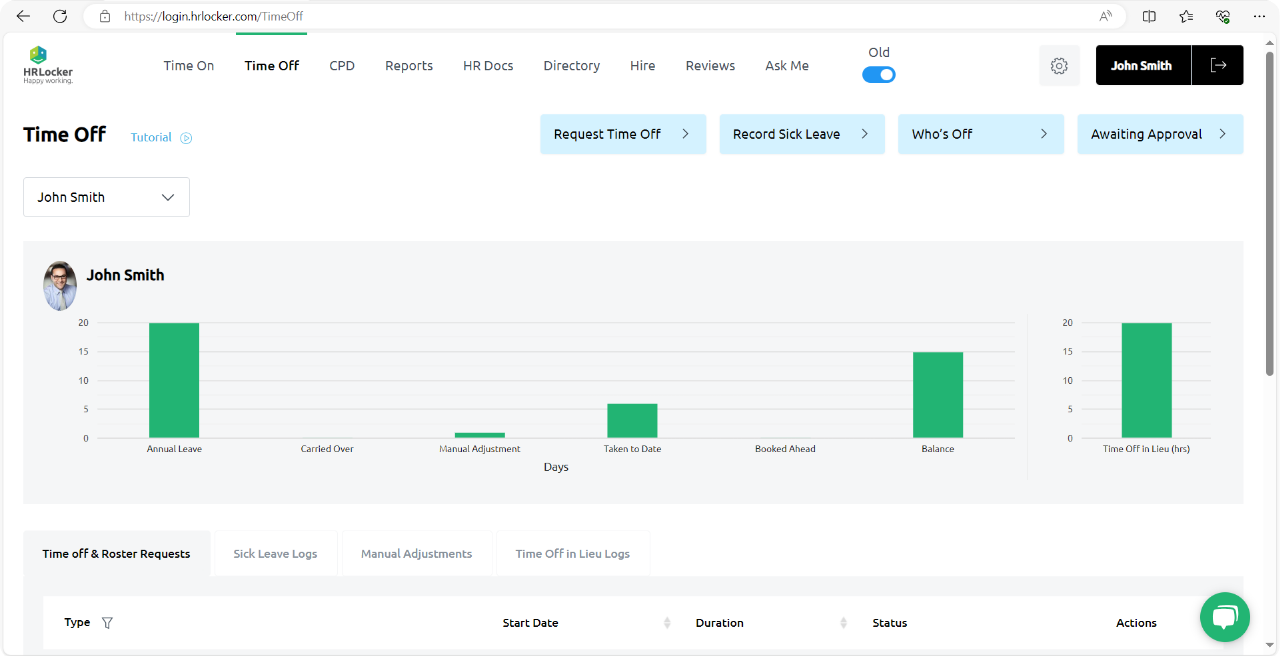
HRLocker’s straightforward employee portal empowers your people to request time off, record sick leave and manage their calendar.

This is the 3rd organisation where I’ve used this software (I introduced it in all 3). It’s an easy way to manage employee leave and other HR tasks, and it’s easy to implement and use. The team is great – they offer quick support and are very friendly, responsive and helpful,Hilary D. (HR Manager).

Top features for managing people and replacing your manual tasks

  • Self-service portal to give staff more control and automate data management
  • Advanced time management tool for time off, TOIL, sick leave and time tracking
  • CDP module to help your employees and your business grow and thrive
  • Streamlined payroll export to eliminate errors and minimise your workload
  • Recruitment and onboarding: HIRE is an end-to-end solution that saves you hours of work
  • Compliance management to stay in line with GDPR and other regulatory requirements
  • Other time-saving features like reporting and performance management
  • Best-in-class customer success to help you make the most of the platform

The benefits of using HRLocker

When you use HRLocker, you cut down on manual HR tasks that clutter your day. Take advantage of a centralised solution that works as a single source of truth for your business. The platform stores unlimited employee information and reports, which you can access at any time.

And because the platform is self-service, you give staff more autonomy over processes like requesting leave, tracking certifications and managing their personal details. That means you get more time back in your day to focus on how to best engage your team and grow your business.

And speaking of growth, our streamlined recruiting platform HIRE helps you attract and select the applicants your company needs to level up. Then, we help you engage and retain new hires with a fuss-free onboarding process. All this while helping you stay compliant, go paperless and minimise errors.

Pricing

There’s no minimum number of employees to get started with HRLocker, so no matter how small your team is, we can help you get started and then scale. Our HR Essentials and HR Professional plans are the best fit for most small businesses.

HR Essentials
HR Professional
for your day-to-day HR operations & tasks

(From 15 employees)

for managing your hybrid or remote team

(From 15 employees)

£3.50 per employee per month £5.50 per employee per month


HRLocker is user-friendly and not very complicated to use, which has made it easy to roll out to our business. Being able to produce reports has been useful for the HR team, and we can now start looking at data and using it to solve HR problems. The tool allows us to be more efficient,Kate O. (HR generalist).

Rippling

Rippling’s comprehensive HR software helps centralise processes from recruitment to payroll to help you run watertight HR processes. The tool’s workforce management platform helps you automate your workflows, and the software also offers other HR, IT and finance products to complement its core platform.
Rippling global payroll

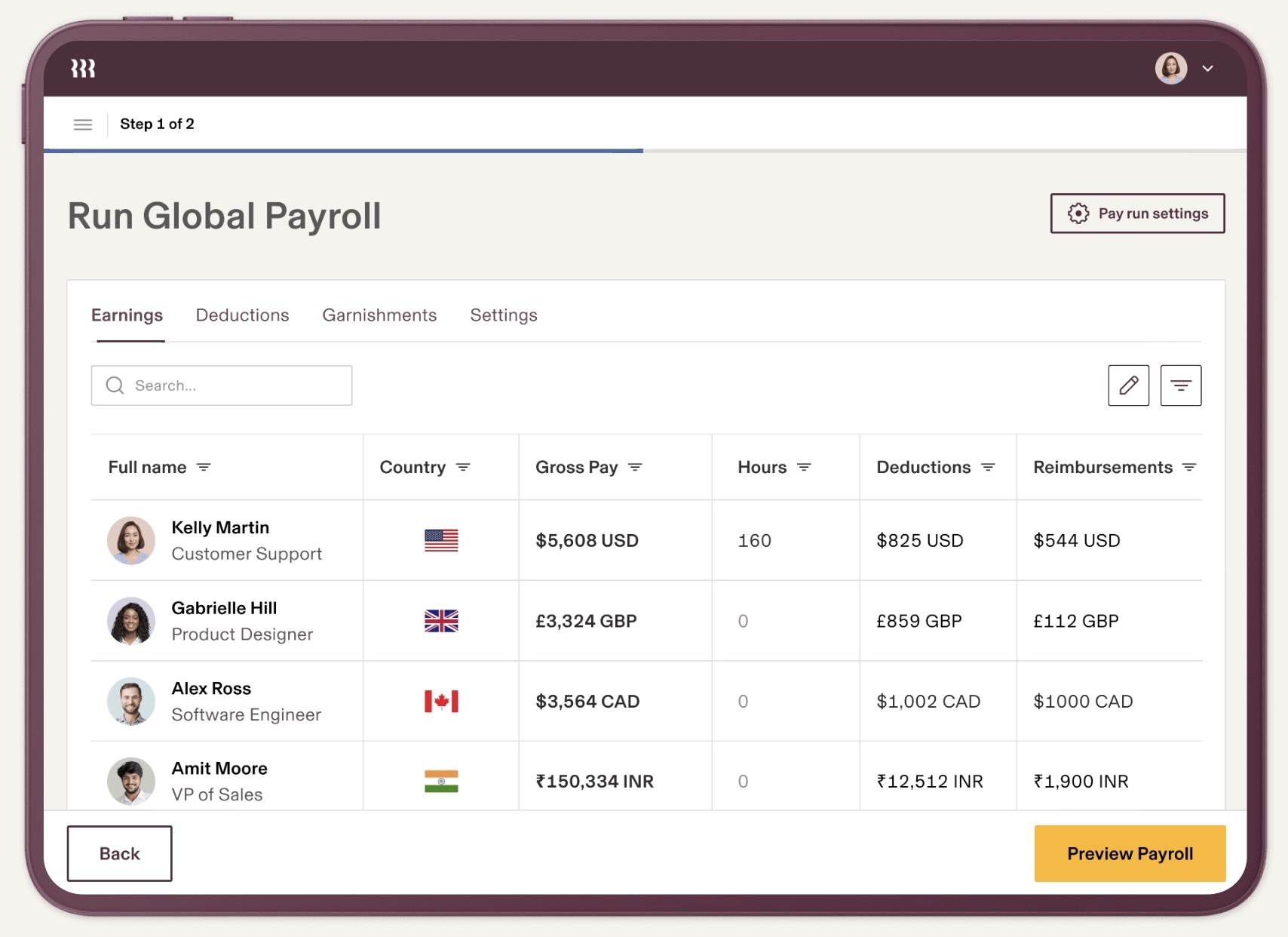
Rippling is great for teams that need to manage a workforce across multiple countries.
Source: Rippling

Key features

  • Payroll services for global teams
  • Talent management features for recruitment and hiring
  • Time and attendance for time tracking and leave management
  • Learning management to foster employee growth and engagement

The benefits of using Rippling

Rippling can help you centralise and simplify the way you manage numerous HR processes. Many of its features are geared towards global teams, so if you have plans for expanding internationally, it could be a good option for your organisation.

The tool offers a range of functionality, from HR tools like talent management, global payroll and custom workflows, to IT and finance features.

Pricing

Rippling pricing starts at £7/month per user. Further pricing information isn’t available on the Rippling website, so you have to contact the company for a quote.

Now we are connecting a bunch of programs together to make my workflow easier. Rippling puts my HR, payroll, benefits and onboarding all into one place, making my job that much better,Brock M. (HR Manager).

People HR

People HR is designed with the needs of small and growing businesses in mind, and it can help you better manage processes like leave management, reports and recruitment. The tool also helps you automate those repetitive tasks that currently take so many hours out of your week.
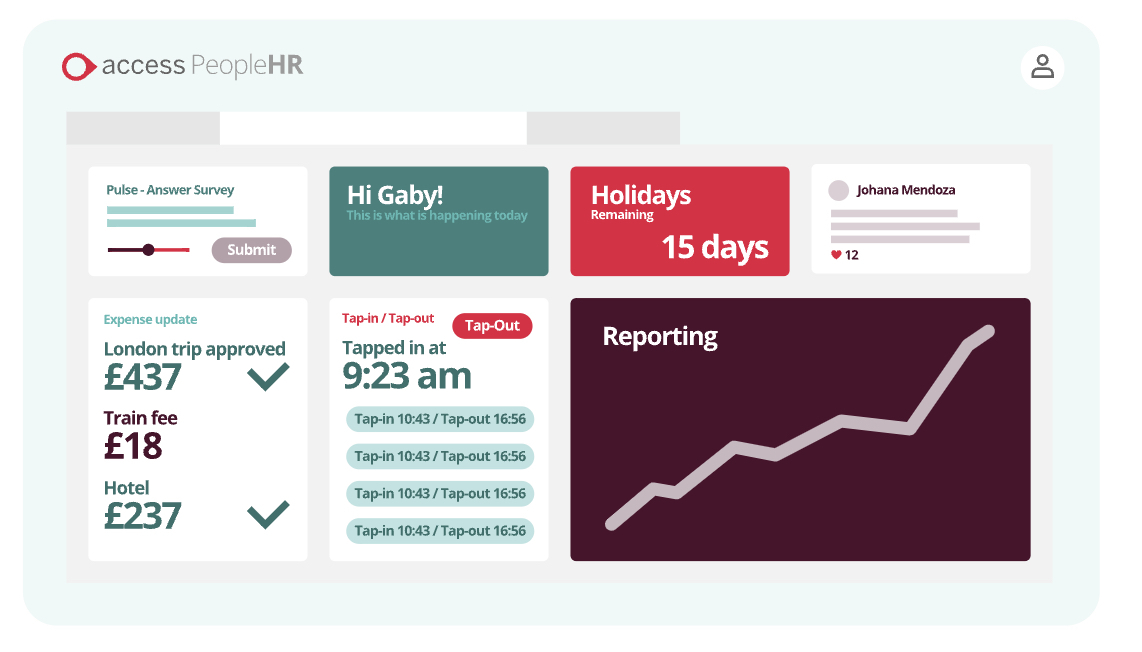
People HR self-service management system

People HR lets employees take tasks into their own hands with a self-service portal.
Source: People HR

Key features

  • HR management software with a self-service portal
  • Applicant tracking system (ATS) for streamlined recruiting
  • Time and attendance management
  • Payroll and reporting features

The benefits of using People HR

Because People HR is a comprehensive HR management system, it lets you centralise all your processes under one roof. Plus, the tool helps you automate your HR workflows and reduce your manual tasks, giving you back more time in the day.

It includes HR software essentials like leave management, a self-service portal and recruitment tools, while also providing useful reports that give you insights into how you can improve your business and its processes.

Pricing

People HR offers four pricing plans:

  • Starter – £3 per employee per month
  • Core – £5.50 per employee per month
  • Pro – £8 per employee per month
  • Elite+ – £9.50 per employee per month

We use People HR across our group for efficient, collaborative and quick processing of HR data. As a fast-paced growing organisation, it’s essential our time is spent efficiently on our small team. People HR is great for reducing heavy admin burdens,Amy D. (Group HR Advisor).

BreatheHR

BreatheHR’s core product is its HR software, which is tailored to small and medium businesses. The tool helps you manage your people, track leave and absence and generate reports. Breathe also offers a number of add-ons to complement its core HR tool, including time and attendance, training and courses, expenses management and recruitment tracking.
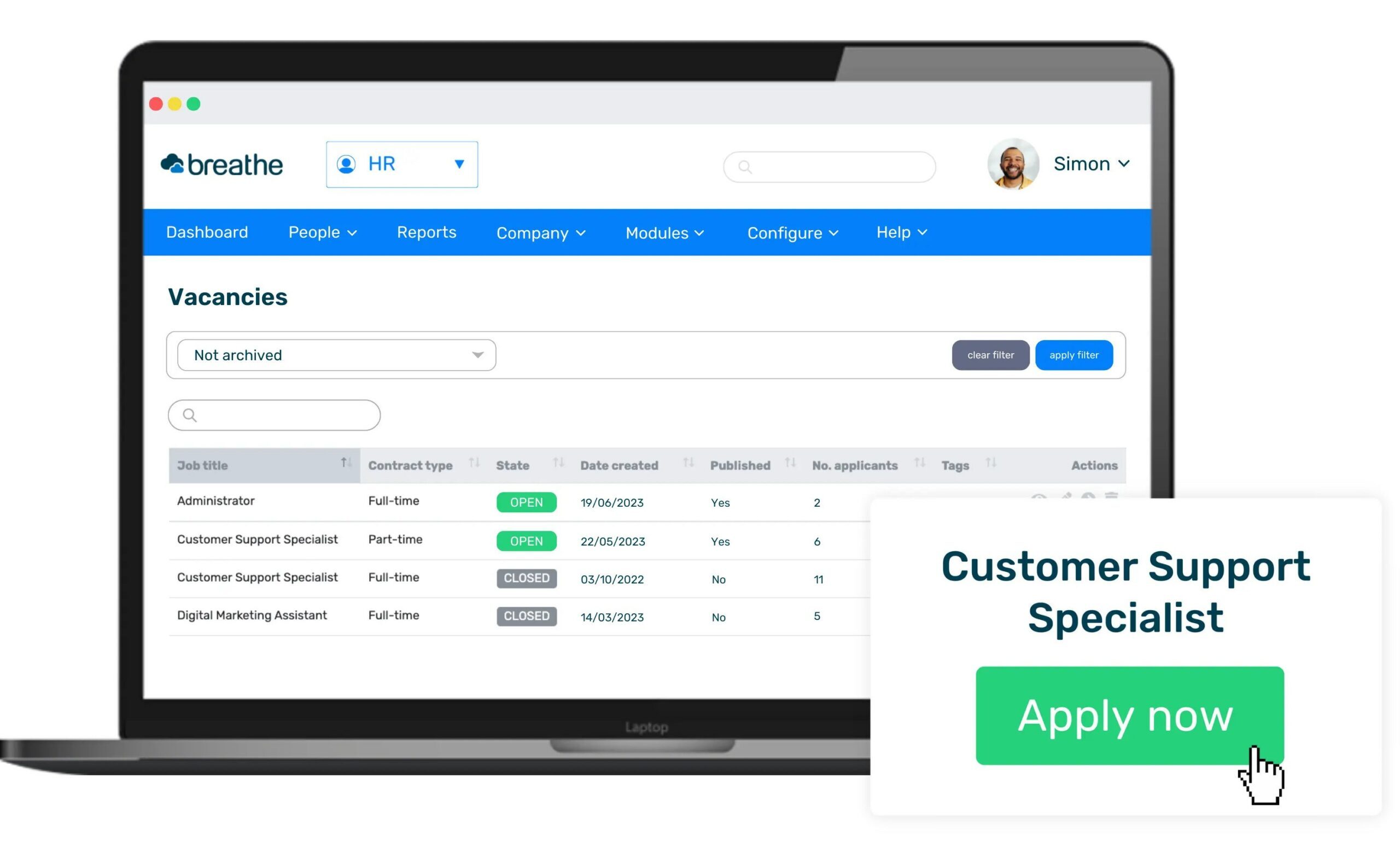
Breathe recruitment feature

BreatheHR’s ATS helps streamline the recruitment process.
Source: BreatheHR

Key features

  • Holiday planning and sick leave management
  • Performance tracking for employee development
  • Recruitment tools for a smoother hiring process
  • HR dashboard with convenient automation features

The benefits of using Breathe 

Breathe’s HR management system lets you consolidate your processes for a smoother daily workload. And on top of simplifying daily tasks, the tool provides an HR database that helps you easily locate employee information and store documents.

Self-service portals encourage employee autonomy, taking pressure off your HR department, as does task automation. And if you decide you need more features, you always have the option to choose add-ons to your package to help you with time and attendance or recruitment.

Pricing

BreatheHR’s pricing model varies depending on how many users you have and whether you choose add-on products. Prices start from £22/month per business.

You can calculate how much you would pay depending on the size of your company and the features you need on BreatheHR's website.

We’ve recently implemented Breathe HR in our business and it has made our HR processes easier to deal with. It’s very easy to navigate and it’s also very simple to book holidays,Laura A. (Senior Systems Analyst).

BrightHR

Though the company offers various products related to human resource management, BrightHR’s core software packs many of your HR processes, like leave tracking, payroll and employee development into one tool. You also have the option to add on recruitment features and HR support if needed.
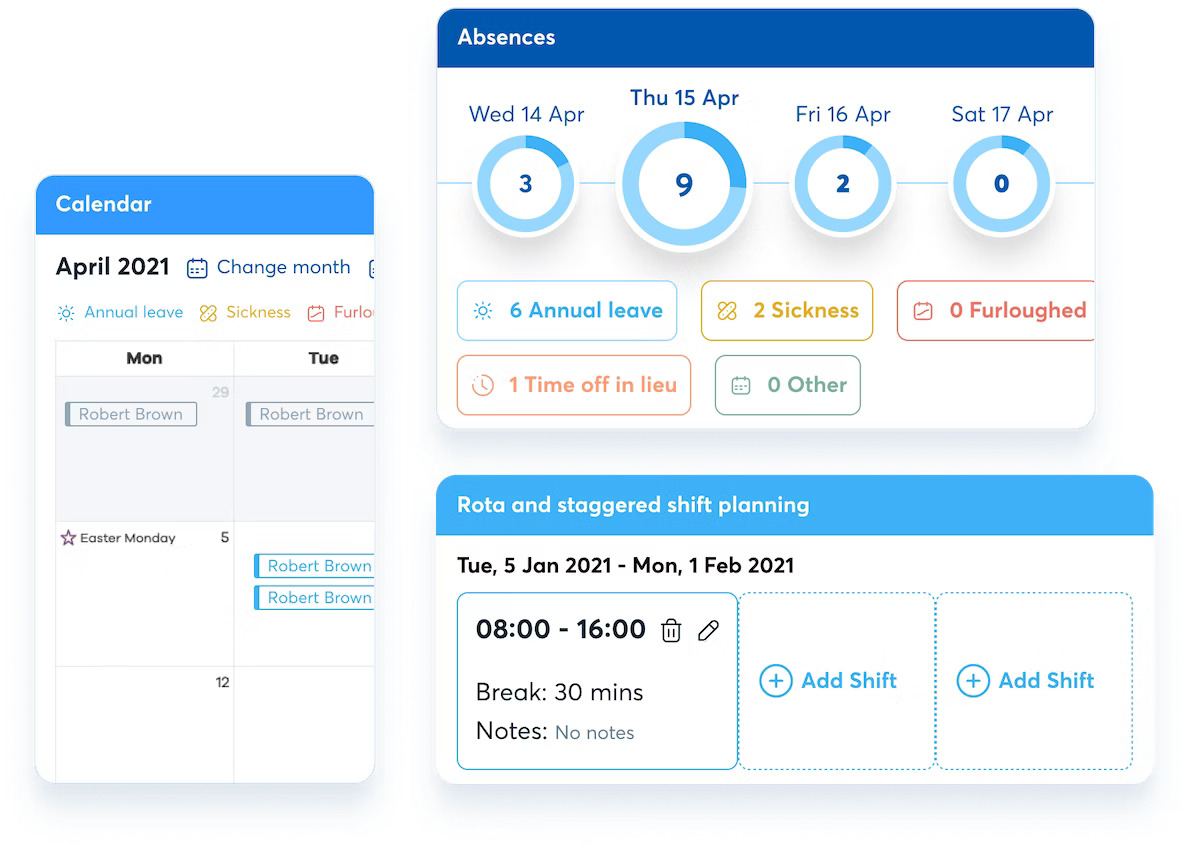
BrightHR time and absence management

You can use BrightHR for all your time management processes, from absence tracking to shift planning. Source: BrightHR

Key features

  • Leave management with late and sickness tracking
  • Unlimited storage space for HR documents
  • Payroll reports that help you calculate accurate wages every time
  • BrightLearn feature for ongoing learning and development

The benefits of using BrightHR

As a people management tool, BrightHR helps simplify and automate tasks like holiday management, sick leave, overtime tracking, shift planning and payroll. So the tool can be especially useful for teams with employees who work hourly shifts.

If you need more from the tool, Bright HR’s People Navigator helps you find and hire the best employees for your open roles. And for HR managers who need a little extra support, BrightHR Lightning offers instant AI support for your most urgent questions.

Pricing

Pricing information isn’t available on the BrightHR website, so you have to contact the company for a quote. 

BrightHR is very easy to use, and the dashboard helps you navigate through the platform. If you’re stuck on anything or unsure how to operate the tool, the Bright HR team is always on hand to take your call and support you,Kevin B. (HR Manager).

Get HR Software for Better Team Engagement and a Lighter Workload

Stressing over compliance and accuracy no longer needs to take up your day.

When you choose an HR software solution that aligns with your business needs and values, you can automate the processes that eat up so much time while ensuring compliance across the board. 

Just remember to prioritise the following features and characteristics when comparing HR platforms:

  • Strong customer service
  • Recruitment and onboarding support
  • Comprehensive compliance management
  • Employee self-service portal
  • Automated TOIL calculations
  • Leave and absence management
  • Continuous Professional Development (CPD)
  • Core values that align with your own

Once you fully integrate the right tool into your operations, you’ll have more time to focus on the impactful tasks that add meaning to your work, like creating a great employee experience and growing your team.

Book A Free Demo

Free up more time with HRLocker, an all-in-one HR solution to eliminate manual processes and inefficient spreadsheets

Frequently Asked Questions about HR Software for Small UK Businesses

How do you implement HR software in a small business?

There are a few things you need to do to implement software in your small business to ensure its success:

  1. Migrate data: Bring in your employee data from whatever you’re currently using, whether it be Excel or paper-based records. HRLocker does this for you as part of our free implementation service.
  2. Understand the tool: Get a proper onboarding with the tool’s customer support team to understand how to make the most of the platform.
  3. Train employees: Give your employees the support they need to understand the platform and incorporate it into their daily tasks.
  4. Customise the platform: Modify workflows and make adjustments so the software fits the needs of your business.
  5. Monitor usage: Track how much your employees are using the tool to ensure you’re getting value out of it.

What HR software does a small business need?

A small business needs HR software that can automate and simplify essential HR processes. Plus, a small business needs a self-service, customisable solution with a centralised employee database, as well as a strong customer support team that can get them up to speed with the platform.

What’s the best way to calculate and manage time off in lieu (TOIL)?

The best way to calculate and manage TOIL is with a specialised HR tool. For example, HRLocker automatically calculates and allocates employees’ TOIL so you don’t have to manually sort through logged hours and leave calendars.

Smart People Management: Top 5 HR Software Solutions for Small UK Businesses was last modified: August 8th, 2025 by Agile Communications

(more…)

4 min read

As employees are urged back into the workplace, many women lack the same financial incentive as their male counterparts.
The gender pay gap isn’t a new challenge, but a fresh strategy is needed to bridge the gap between men and women in the workplace.

Last month, the Gender Pay Gap Information Bill was passed in Ireland. This means from early 2022, businesses in Ireland will need to report on their organisation’s pay gap, and where applicable, highlight the measures they’ll be taking to reduce it.
This comes at a time when job vacancies are at a record high, and research has shown women faced the most financial disruption during the pandemic.
While the prospect of reporting this pay gap might seem intimidating to businesses that aren’t familiar with such high levels of transparency, brands have the opportunity to attract more women to fairly compensated roles.
Before we look at what this means for businesses, here are the key points.


What you need to know

First things first: the gender pay gap isn’t the same as equal pay. It’s the difference between the average pay of men and women in a single organisation, irrespective of role or seniority. So, it follows that an organisation’s gender pay gap can highlight whether women are making it to the boardroom or are limited to less senior roles.
For now, the ruling will apply to workplaces that have 250 employees or more, with the threshold lowering to 150 employers after 2 years, and 50 employees the consecutive year. While it’s most pressing for larger organisations to tackle their gender pay gap, businesses of every size need to begin collating reports and designing strategies that tackle their unique pay gap.

Beyond reporting, businesses will need to produce a statement to justify any discrepancies in pay between men and women. The work doesn’t end there: they’ll also be required to set out a strategy that tackles these disparities. Put simply, this won’t be a box-ticking exercise. What businesses choose to do about their pay gap will matter just as much as the identification of it.
Reporting and planning will require cross-departmental collaboration, with HR, finance, legal, comms, and executives each playing their own part. Businesses should be seeking out relevant stakeholders within the business right now, so they can plan their approach before the legislation comes into place.

Check out the Irish Times Article about gender pay disparities set to become a controversial topic in Ireland here.
Non-compliance could land businesses with high court orders. The Irish Human Rights Commission will oversee compliance, and, where businesses are non-compliant, refer to the High Court. Employees who feel their employers are demonstrating non-compliance can direct their complaints to the Workplace Relations Commission.
The business will need to share the mean and median of its gender pay gap. The mean is the difference between male and female rates of pay. To calculate the median, businesses compare the female middle earner with their male counterpart. In practice, this means if the majority of women are in lower-paid roles, they’ll have a lower middle income than men, who populate senior leadership and executive boards.


What this means for business

While the message is serious, many businesses feel positive about the move towards greater transparency in Ireland. We surveyed 260 HR leaders as part of our Gender Pay Gap Report, and 46% identified greater employee retention as a result of regular gender pay gap reporting.
New rules on gender pay gap reporting in Ireland provide businesses with an opportunity to mitigate a range of biases in their hiring and HR practices. By incorporating progressive strategy and technology to reduce bias, they benefit from having the right talent for their teams.
In the coming months, HR teams should begin to collate their employee data so that analysts can provide comprehensive reports. This information is much easier to access when it’s in a centralised database, such as an HR platform. Businesses can use these systems to investigate their gender bias and stay ahead of the curve, long before the report is due.

Looking to the future, businesses need to consider how their policies impact all genders. For example, women still take responsibility for the majority of household tasks and childcare. Just by implementing a comprehensive flexible working policy, businesses can improve conditions for female employees who may wish to work from home some of the time or adjust when they come into the office.


This is only one example, though

For companies to make effective strategy decisions on closing the pay gap, they need to have access to a breadth of current employee data. Regular and consistent analysis of the gender pay gap in any business is a must. This isn’t a once-a-year activity.
Every day, employees quit their jobs, request new positions, and move laterally around the business. Without a live overview of employee data, companies will miss key diversity insights.

The reputational consequences of a gender pay bias in the workplace can be catastrophic to the hiring pipeline. If you knew you’d be less likely to achieve a high-paying role at a company, simply because of your gender, would you even apply in the first place?


Want to know more?

Gender Pay Gap Reporting Feature Image

Click here to download our free Gender Pay gap Reporting Review. HRLocker has compiled the Gender Pay Gap Reporting Review. This report provides insight into the attitudes and measures being adopted by HR professionals in relation to the new reporting requirements, highlighting best practice approaches to GPG compliance.

Bridging the gender pay gap in Ireland was last modified: September 27th, 2023 by Jenny Martin

(more…)

5 min read

Diversity, equity and inclusion (DEI) is an essential aspect of HR work. It’s a cornerstone that fosters a more welcoming and fair working environment and creates a culture where everyone feels they belong.

However, it’s crucial to realise that DEI reporting is not just a part of HR, but a critical area intrinsically linked to compliance.

To meet legally binding directives, HR professionals have to stay updated with the latest requirements and best practices. So, let’s recap what we need to know.

Understanding DEI Reporting Requirements

In Ireland, DEI reporting has come to the fore with the introduction of the Gender Pay Gap Information Act in 2021. Beyond ensuring equal pay for equal-value work – which is required under the Employment Equality Acts – it’s about gender representation. It shines a light on the difference between the proportion of women in lower-paid jobs compared to men.

In 2022, the gender pay gap in Ireland favoured men by 9.6%. This is significant because, over a lifetime, salary disparities considerably impact women’s earnings and pensions compared to their male colleagues.

When it first came into force, in 2022, the Act mandated that organisations with more than 250 employees report their hourly gender pay gap across a range of metrics annually. In 2024, the requirement was extended to organisations with 150 or more employees.

As of 2025, the Act applies to those with 50 or more employees. This means that even smaller firms have to report their gender pay gap, making it crucial for all HR professionals to understand and prepare to meet these ongoing requirements.

Employers must publish the gender pay gap information on their website, or in some other way, so it’s accessible to their workers and the public for at least three years from the date of publication.

DEI in the Workplace

Why DEI Reporting Matters

While the failure to report or follow DEI reporting requirements doesn’t lead to financial penalties, it’s important to note that the Act empowers the Irish Human Rights and Equality Commission (IHREC) to ensure compliance through the civil courts. This could potentially damage reputation and negatively impact workplace morale.

As vital as regulatory compliance is, DEI reporting represents more than a legal obligation. It signifies a dedication to establishing a just and welcoming workplace. The benefits of championing DEI - as we detailed in another recent blog post – are profound. In short, DEI has a massively positive impact on employees, organisations, and society, inspiring and motivating HR teams.

There’s also a wealth of industry research on the different ways DEI reporting helps employers and employees. Deloitte, for instance, highlights that the transparency of effort that DEI reporting provides builds trust and fosters a sense of worth and belonging between businesses and their people.

Simply put, when employees see their employers actively working toward a more diverse, equitable and inclusive workplace, it enhances loyalty and boosts performance.

Practical Tips for HR to Keep Up with DEI Reporting

DEI reporting requirements most often fall on busy HR. It’s an added administrative burden that can be tough to meet, especially for smaller teams. Still, there are ways to make the task easier and potentially more impactful.

Stay informed

To ensure you don’t overlook any responsibilities, it’s crucial to stay up to date with regulations and requirements. One way to do this is to review updates from authoritative sources on a regular basis.

The Department for Children, Equality, Disability, Integration and Youth, for example, has published guidance, including frequently asked questions (FAQs) for anyone looking for more information.

Good information management

There’s nothing worse than scrambling to gather records from different places that have passed through lots of hands. Keeping detailed and accessible records will help ensure that necessary data is accurately captured and easy to access when needed.

Knowing where employee records are and being able to search through them quickly offers much more than mere housekeeping advantages. Good information management also helps when it comes to audits, reviews, and other governance-related tasks.

Look for tech-enabled solutions

There’s a whole range of technologies that can help with DEI reporting, from relatively simple tools like digital document signing and tracking that make good information management quicker and easier to more complex, HR-specific software.

Human Resource Information Systems (HRIS), in particular, make DEI reporting more efficient. Such software manages, streamlines and automates core HR processes. Powered by artificial intelligence (AI), these technologies collect, analyse and create reports with minimal input from HR teams, freeing them up for more people-centred work.

Keeping up to date with DEI reporting requirements may seem daunting, but with the right understanding, approach, and resources, it can be both manageable and rewarding.

By staying informed, managing information well, and leveraging technology, HR can meet obligations and have time to drive positive change within organisations and work on the more rewarding goal of nurturing more diverse, inclusive and equitable workplaces.

employees in the workplace DEI

Learn more about workplace diversity, equality and inclusion

Click here to read our blog post on Championing Workplace Diversity, Equity, and Inclusion (DEI).

Click here to watch our webinar, Mastering DEI in the Workplace.

Click here and listen to our podcast on Diversity, Equity, and Inclusion: Navigating Challenges, Driving Change and Measuring Success in the Future of Work.

Click here to download our free Diversity, Equity, and Inclusion Whitepaper.

Links to more support and information

Irish Human Rights and Equality Commission – Ireland’s national human rights and equality institution.

Citizens Information – Provides comprehensive information on public services and on the entitlements of citizens in Ireland.

Workplace Relations Commission – An independent statutory body responsible for workplace relations and compliance with the Workplace Relations Act 2015.

The Labour Court – Ireland’s industrial relations tribunal.

Intreo – The Irish Public Employment Services (PES), part of the Department of Social Protection, is the single point of contact for all employment and income support services.

National Disability Authority – An independent statutory body that provides evidence-based advice and research to the Government.

Open Doors Initiative – Provides opportunities to some of the marginalised members of Irish society, creating pathways to work.

Pathways to Progress – Aims to resource people from a migrant background to find work and pathways to employment.

Employers for Change – An employer disability information service.

Towards Work – The central point for people with disabilities in Ireland to access resources and support in their journey toward employment or entrepreneurship.

Understanding DEI Reporting Requirements in Ireland: Key Compliance and Best Practices was last modified: August 21st, 2025 by Agile Communications
(more…)

3 min read

On Monday, July 3rd, 2023, specific employment rights for parents and caregivers, granted by the Work Life Balance and Miscellaneous Provisions Act 2023, came into force. Here's a summary of what you need to know.

The Right for Parents and Carers to Request Flexible Working

Workers with six months of continuous service under their employer and caregiving responsibilities for specific individuals have the right to ask for flexible work arrangements. The entitlement for parents and caregivers to seek flexible work arrangements was established after the Workplace Relations Commission (WRC) crafted a Code of Practice.

To find out more, read our blog post Leave Entitlements for Working Parents in Ireland 2023.

The Right to Request Remote Working

Every employee with a consistent service period of six months under their employer has the right to request remote working arrangements, and for their requests to be handled transparently and swiftly.

The WRC has produced a Code of Practice for employers and employees that provides all the necessary information about both the Right to Request Flexible Working and the Right to Request Remote Working.

Domestic Violence Leave

Employees who have experienced or are currently facing domestic violence, whether in the past or present, are eligible to take leave for various essential reasons. This includes seeking medical care, psychological counselling, legal aid, and other related services they might need. Furthermore, employees can also take this leave to support specific individuals who depend on them, to help them seek necessary services for dealing with domestic violence.

This entitlement grants employees up to five days of paid leave within a 12-month period, at their full pay rate.

Read more about it in the HRLocker post Embracing Change: Fully Paid Domestic Violence Leave to Commence This Autumn.

Free Work Life Balance and Miscellaneous Provisions Act 2023 Policy Templates

Unpaid Leave Entitlements Policy Template

This Unpaid Leave Entitlements Policy Template has been created so that you can adapt the policy to your company’s needs. It covers various aspects, including unpaid leave for medical appointments and caregiving, extended breastfeeding entitlements, and the right to request remote or flexible working arrangements.

Unpaid Leave Entitlements Policy


Medical Care and Support Leave Policy Template

This policy outlines the introduction of Medical Care and Support Leave, as introduced by the 2023 Act. This leave provides employees with an entitlement to unpaid leave for the purpose of providing personal care or support to certain individuals who require significant care due to serious medical reasons.

The policy clarifies the eligibility criteria, application process, and relevant considerations for taking such leave.

Medical Care and Support Leave Policy


Employee Broadened Access to Maternity Leave Policy Template

This policy outlines the amendments introduced by the 2023 Act to the Maternity Protection Acts 1994 to 2022, which extend the right to take maternity leave to transgender men who have given birth.

This policy reflects our commitment to inclusivity, diversity, and equal treatment of all employees, ensuring that transgender individuals are provided with appropriate support and consideration during the maternity leave process.

Employee Broadened Access to Maternity Leave Policy


Employee Extension to Breastfeeding Entitlements Policy Template

This policy outlines the provisions introduced by the 2023 Act, which amends the Maternity Protection Acts 1994 to 2022, extending the period during which employees who are breastfeeding are entitled to take breaks or reduce their working hours for breastfeeding purposes.

This policy aims to promote a supportive and inclusive work environment for employees who are breastfeeding, in line with legal requirements.

Employee Extension to Breastfeeding Entitlements Policy

Work Life Balance and Miscellaneous Provisions Act 2023 (Ireland) Explained was last modified: July 17th, 2024 by Jenny Martin

(more…)

5 min read

IR35 is essentially a UK payroll tax for UK-based contractors. IR35 impacts very few Irish contracts as it's a UK law designed to stop workers in the UK's contracting industry from avoiding their full tax and National Insurance obligations.

IR35 legislation gavel

IR35, first announced in 1999, was designed to tackle tax avoidance through what the UK government called the growing practice of 'disguised employment'. This is when a person works for a client in the same way as they would if they were an employee, but instead provides their service as if they are self-employed or via a limited company because the tax liability is lower than for employees.

IR35 became law in 2000, giving the UK's tax authority, HMRC, the power to tax some contractors as if they were employees. The rules have been updated significantly several times since then. 

The 2021 update was designed to tackle non-compliance from employers, ensuring that contractors and employees pay similar tax. The main effect was that clients (not contractors) were made responsible for making IR35 decisions. 

Before, contractors could self-certify their IR35 status, meaning they could slip through the net and avoid fair levels of taxation. With businesses increasingly relying on short-term contract work, it became more important than ever that companies have a system in place for managing and retaining contract workers.

What are the implications for firms that don’t comply?

The first thing businesses need to know is that a broad-brush approach to IR35 won’t cut it. HMRC advises that businesses should pay extra attention to their IR35 decisions and avoid tarring workers with the same employment status brush. Where a team of contractors may appear similar on the outside, the way they do business can differ enormously.

In 2020, 4.4 million people in the UK were registered as self-employed, in sectors as varied as construction, media, professional services, and sales—some work on a project-by-project basis, others, a 12-month retainer. While a freelance accountant may wish to invoice at an hourly rate, an architect could choose to charge a project fee.

With this level of role diversity within the contractor workforce, it’s no wonder categorising employment status is a laborious job. Fortunately, HMRC provided some case study examples to support decision-making.

Hypothetical contractor Vasilis is a risk management consultant for a pharmaceutical firm. He falls into IR35 because the business controls where he works. He’s unable to take on additional work due to his contract, and his role includes management responsibilities. This means he’s considered to be an employee under IR35.

IR35 Processing

Freelance web designer, Susan's employment status falls outside of IR35, so she’s responsible for handling her own tax. This is because she works for multiple clients, from a location of her choosing, and is paid for work completed (not by day).

Both Vasilis and Susan are service industry contractors, but their business models are quite different when you dig below the surface. It might seem tempting to lump them both into the same category, but this would be penalised by HMRC.

Even businesses with the most robust management strategy are likely to make mistakes when first dealing with IR35. What’s most important is that you can provide evidence of comprehensive processes and policies that guide IR35 decision-making within the business.

If businesses want to make use of contractor talent, they must have measures in place that ensure IR35 compliance. While fines and penalties are unfortunate, putting off top-tier contract talent with poor management skills could be more damaging to your business in the long run.

The benefits of working with contractors in modern times are that the needs of businesses change quickly. Having a flexible workforce available on a project-by-project basis is invaluable if companies don’t have the capacity to take on additional employees.

What can companies do to cultivate better contractor management?

With every contractor you hire comes a mountain of paperwork (or a shared drive full of documents).

Today, HR platforms provide a central database to manage all workers, no matter their employment status. Centralising this information improves visibility and makes it easier to access for other departments. No doubt there’ll be temporary workers you want to hire in the future, so having their profile and documents to hand will save some admin in the long run. HR teams may not work with every contractor hired, but other areas of the business might need to know the status of their employment.

IR35 work

With good policies in place, HR teams can utilise automation to ensure their contractors are always up to date with the latest details on their employment status. Clear, frequent communication between HR and contractors helps to consolidate the rules and align contract staff with internal policies.

The IR35 rules apply on a case-by-case basis, which means contractor management requires regular maintenance, even for longstanding relationships. Just make sure you define your protocols for determining employment status, so contractors know what to expect, and your business knows where they stand on compliance.

Having a framework in place will enable you to spot discrepancies and fine-tune your procedures so that you can avoid non-compliance. Otherwise, HMRC might ask you to cough up the tax and national insurance payments that should have been made. And those costs soon stack up.

To many businesses, IR35 might seem like another burden they have to bear in the aftermath of Covid-19. But as more people embrace self-employment and the flexibility that comes with it, companies could lose access to unique talents and skills if they’re unable to properly support the contractor ecosystem. It’s time to embrace the structured approach to contractor management, so everyone can reap the rewards of increasing employment flexibility.

What is IR35? was last modified: September 27th, 2023 by Nikki O Hagan

(more…)

1 min read

Being an HR professional in a busy tech or professional services company can be really challenging. Having been there in the past and doing it in the present, I know the challenges first-hand.

(more…)

4 min read

Why Should You Use Online Timesheets?

1. Saves space on-site and cuts off-site paper filing service costs

With online timesheets, there’s no need for bulky filing cabinets or stacks of physical records taking up valuable office space. Everything is stored securely in the cloud, which means you can wave goodbye to costly off-site document storage and regular expenses for shredding or archiving old paperwork.

2. Cuts time spent on submissions and approvals with digital upload and receipt functionality

Online timesheets let employees easily submit their hours and supporting documents directly from their computer or mobile device, eliminating the need for paper forms or physical signatures. Managers receive instant notifications, allowing them to review, approve, or request changes in real time—no more delays from tracking down paperwork or waiting for files to travel between departments. 

3. Works across multiple locations on one system without local management

Online timesheets are accessible from anywhere, making them ideal for organisations with teams spread across different offices, job sites, or even countries. Everyone—whether on-site, remote, or part of a hybrid setup—logs hours and submits information using the same centralised platform. There’s no need for a local manager to handle or consolidate physical timesheets, so processes remain consistent, accurate, and fully visible to HR and leadership. 

4. Deliver data-based accountability to decision-making

Online timesheets provide detailed, accurate records right across your business. This holistic recording supports transparent reporting, highlights attendance trends, and reveals patterns in overtime or resource allocation, empowering managers and decision-makers to make informed choices rooted in real data rather than assumptions.

5. Tracks resource allocation per project across departments

With online timesheets, you can see exactly how much time employees are spending on each project, client, or task with complete visibility. This simplifies cross-department collaboration by allowing project leads to track contributions from various teams in real time. 

6. Helps to analyse productivity and gain insight for future task prioritisation

Online timesheets give managers access to detailed, real-time data on how employees are spending their time. With this information, you can easily identify which activities or teams are delivering the highest value, see where there may be inefficiencies, and assess if deadlines or budgets are being met. Over time, this allows you to spot patterns in performance and workload, highlight opportunities for training or resource reallocation, and plan more accurately for future projects. 

7. Brings transparency to customer billing and payroll

By using online timesheets, every hour logged by employees is automatically linked to the relevant client, project, or cost centre, providing an auditable trail for billing or allocating resources. This transparency means your clients see exactly what they’re being billed for, building greater trust. When it comes to payroll,  employee hours, overtime, and adjustments are precisely recorded. This ensures pay is calculated correctly every cycle, reducing potential disputes. 

8. Installs a strong culture of accountability, discipline and focus

Online timesheets promote personal responsibility by making it clear that every team member’s hours are tracked in real time, creating accountability across all levels of your organisation. This encourages consistent attendance, effort, and time management. Clear, accessible records also reinforce company standards and highlight both high performers and areas needing improvement, helping to drive professional development and maintain a focus on objectives. 

9. Ensures compliance and provides evidence in disputes or even litigation

Online timesheets create a secure, tamper-proof record of employee attendance, hours worked, breaks, overtime, and project allocation, supporting your compliance with employment legislation, industry regulations, and company policies. If a dispute arises you have immediate access to detailed, verifiable information to support fair and transparent resolution. In the event of a legal challenge, this digital repository stands as evidence, safeguarding your organisation and helping to protect employee rights. 

10. Works faster and easier than dated paper or spreadsheet systems, and delivers an instant reporting function

Moving to online timesheets means ditching the slow, error-prone routines of manual entry and outdated spreadsheet tracking. Employees can quickly enter their hours from any device, instantly submit requests for approvals, and avoid paperwork bottlenecks that cause unnecessary delays. The system automates repetitive admin, keeps everyone up to date, and significantly reduces the risk of lost or misfiled records.

Most importantly, online timesheets provide instant access to customised reports—no need for hours of compiling, sorting, or cross-checking formulas. HR, managers, and decision-makers can immediately pull accurate insights on attendance, overtime, project spend, and resource allocation. This accelerates not just payroll but broader people analytics and compliance monitoring, enabling your business to react quickly, allocate resources smartly, and maintain a clear overview of workforce activities in real time.

The result?

Less time chasing admin and more time focused on driving business outcomes.

Ten Reasons Why Online Timesheets Will Make You The Office Hero was last modified: August 15th, 2025 by Agile Communications

(more…)